Quick Summary: Revered for thousands of years across Persia, the Mediterranean, and India as a sacred symbol of vitality and longevity, the Pomegranate (known as Anar in Hindi) is a nutritional jewel. Each ruby seed (aril) is a bursting capsule of powerful polyphenols called punicalagins, delivering three times the antioxidant capacity of green tea or red wine. Discover the game-changing 2-minute underwater deseeding trick, cardiovascular benefits, and why whole seeds outshine commercial juices.
📋 Table of Contents
- What is Pomegranate? Famous Indian Varieties
- The 2-Minute Underwater Deseeding Trick (Zero Stains, Zero Mess!)
- Punicalagins & Nitric Oxide: The Cardiovascular Powerhouse
- Whole Fresh Arils vs. Packaged Bottled Juice
- Nutrition Facts (What is Inside Pomegranate?)
- Top 5 Proven Health Benefits of Pomegranate
- Delicious Kitchen Pairings (Royal Anar Raita)
- Who Should Be Mindful with Pomegranate?
- Frequently Asked Questions
- Scientific References
🔍 What is Pomegranate? Famous Indian Varieties
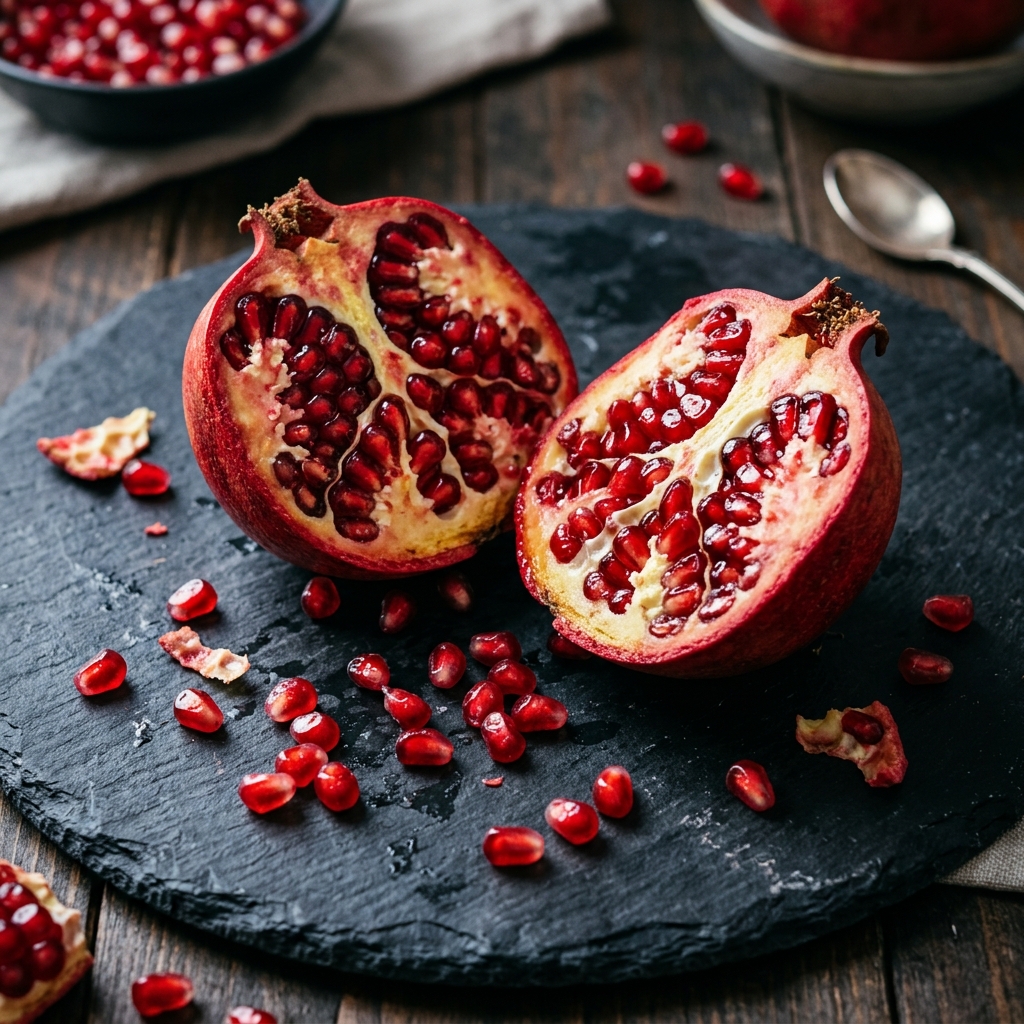
Pomegranate (Punica granatum) is an ancient fruit tree with glossy red leather skin filled with hundreds of jewel-like seed casings known botanically as arils. In India, Maharashtra’s Solapur and Nashik districts are the pomegranate capital of the country:
- Bhagwa (Sindhuri): The superstar of Indian pomegranates. It features a brilliant deep-red glossy rind, striking dark ruby arils, and soft, easily chewable seeds with an exceptionally sweet, low-acid juice profile.
- Ganesh: An heirloom variety developed in Maharashtra with yellow-pinkish rind, soft seeds, and sweet, mild, refreshing flavor.
- Arakta: A high-yielding variety with deep red arils, firmer skin, and a crisp sweet-tangy flavor balance.
🧪 The 2-Minute Underwater Deseeding Trick (Zero Stains, Zero Mess!)
Many people avoid buying fresh pomegranates because peeling them can spray stubborn red juice across kitchen counters, walls, and clothing. Here is the foolproof restaurant chef method that takes just 2 minutes:
💡 The 4-Step Underwater Technique:
- Score the Rind: Slice off the top crown of the pomegranate. With a small paring knife, gently score through the red skin from top to bottom along the 5 to 6 natural white internal ridges (do not cut deeply into the fruit).
- Submerge in Water: Place a large bowl filled with cold tap water on your counter. Submerge the pomegranate completely under the water.
- Pry Under Water: Using your thumbs under the surface of the water, gently pull the scored segments apart. Lightly roll your thumbs over the ruby arils. The seeds pop loose instantly!
- The Miracle Separation: Because the juicy ruby arils are dense, they sink straight to the bottom of the bowl. The bitter white spongy pith is buoyant and floats right to the top! Simply skim off the floating white pith with a spoon, pour the bowl through a colander, and you have a bowl of sparkling ruby pearls with zero mess and zero red stains!
❤️ Punicalagins & Nitric Oxide: The Cardiovascular Powerhouse
Pomegranate is celebrated in clinical cardiology for two extraordinary bioactive compounds:
💡 How Pomegranate Protects Your Heart & Blood Vessels:
- Punicalagins (The Super-Antioxidant): Punicalagins are unique, water-soluble polyphenols found almost exclusively in pomegranate. Research shows they offer three times the antioxidant capacity of green tea or red wine, shielding LDL cholesterol from oxidative rancidity—the primary cause of hardened arterial plaque.
- Boosts Endothelial Nitric Oxide (NO): Pomegranate bioflavonoids stimulate your blood vessel lining to produce natural nitric oxide. Nitric oxide signals vascular smooth muscles to relax and expand, supporting healthy blood pressure and delivering rich oxygenated blood throughout your body.
🥤 Whole Fresh Arils vs. Packaged Bottled Juice
While supermarket shelves are lined with ruby bottles of pomegranate juice, whole fresh seeds are vastly superior for your metabolic health:
| Factor | Whole Fresh Arils (1 Cup) | Commercial Bottled Juice (1 Glass) |
|---|---|---|
| Dietary Fiber | 7.0 grams of prebiotic gut fiber | 0 grams (stripped during industrial pressing) |
| Punicic Acid (Seed Oil) | Rich in rare Omega-5 healthy fats | Completely lost (seeds are discarded) |
| Glycemic Impact | Slow, steady absorption into bloodstream | Rapid fructose spike and insulin surge |
| Added Sugar & Preservatives | 100% natural raw whole fruit | Often pasteurized with high heat; may contain preservatives |
📊 Nutrition Facts (What is Inside Pomegranate?)
Pomegranate arils are loaded with dietary fiber, essential vitamins, and anti-inflammatory compounds. Here is the nutritional breakdown per 100 grams and per 1 cup fresh arils (~174 grams):
| Nutrient | Per 100g Arils | Per 1 Cup Arils (~174g) | Why Your Body Needs It |
|---|---|---|---|
| Energy | 83 kcal | 144 kcal | Nutrient-packed antioxidant fuel |
| Carbohydrates | 18.7 g | 32.5 g | Natural fruit energy accompanied by fiber |
| Dietary Fiber | 4.0 g (14% DV) | 7.0 g (25% DV!) | Feeds healthy gut microbiome and supports regularity |
| Protein | 1.7 g | 3.0 g | Wholesome plant amino acids |
| Vitamin C | 10.2 mg (11% DV) | 17.8 mg (20% DV) | Immune protection & collagen synthesis |
| Vitamin K | 16.4 mcg (14% DV) | 28.5 mcg (24% DV) | Crucial for bone mineralization & blood clotting |
| Folate (Vitamin B9) | 38 mcg (10% DV) | 66 mcg (17% DV) | Supports DNA synthesis & red blood cell production |
| Potassium | 236 mg | 411 mg (9% DV) | Helps maintain cellular fluid balance & arterial health |
🌿 Top 5 Proven Health Benefits of Pomegranate
1. Robust Heart & Arterial Protection
Extensive clinical studies demonstrate that regular consumption of pomegranate helps lower systolic blood pressure, slows the progression of carotid artery stenosis (narrowing), and prevents free radical damage to circulating lipids.
2. Supports Healthy Hemoglobin & Iron Absorption
While pomegranate contains modest plant-based iron, its high concentration of natural Vitamin C and organic malic acids significantly amplifies the bioavailability of iron from whole grains, pulses, and leafy greens eaten alongside it.
3. Natural Joint Comfort & Anti-Inflammatory Power
The ellagitannins in pomegranate help suppress cellular enzymes that break down joint cartilage. Daily intake helps reduce markers of systemic chronic inflammation, supporting easy, comfortable joint mobility.
4. Nourishes Akkermansia Gut Bacteria
When you eat crunchy pomegranate seeds, your colon bacteria transform pomegranate ellagitannins into beneficial compounds called urolithins. Urolithins nourish Akkermansia muciniphila, a keystone gut bacteria species that strengthens your intestinal lining and enhances metabolic fitness.
5. Youthful Skin Radiance & Sun Defense
The unique combination of polyphenols and punicic acid protects human dermal fibroblasts against ultraviolet-induced oxidative stress, reducing the visible appearance of fine wrinkles and promoting elastic skin texture.
🍽️ Delicious Kitchen Pairings (Royal Anar Raita)
One of the healthiest and most luxurious ways to enjoy fresh pomegranate is in an authentic Indian raita:
- Whisk 1 cup of thick homemade probiotic Curd (Dahi) with a pinch of rock salt (kala namak).
- Fold in 1/2 cup of crunchy, ruby-red pomegranate arils.
- Garnish with 1/2 teaspoon of freshly roasted, crushed Cumin Seeds, a pinch of freshly ground Black Pepper, and fresh mint leaves.
- This combination balances gut probiotics, crunchy fiber, and warm carminative spices for effortless summer digestion!
⚠️ Who Should Be Mindful with Pomegranate?
- Blood Thinner Medications: Concentrated pomegranate extracts may interact with certain enzymes (such as CYP450 liver enzymes) involved in processing blood-thinning medications like warfarin. If you take anticoagulant prescriptions, consult your doctor regarding high therapeutic doses.
- Dental Care: Because pomegranate juice contains natural fruit tannins and deep red anthocyanins, rinse your mouth with clean water after eating to keep tooth enamel bright and stain-free.
⚡ Check Your Exact Nutrition & Calories
Want to calculate the exact calories, antioxidants, and fiber in your custom pomegranate serving? Use our free interactive tool:
❓ Frequently Asked Questions (FAQ)
Can I swallow pomegranate seeds whole?
Yes, absolutely! The inner white seed kernel is completely edible and contains beneficial dietary fiber and rare punicic acid oils. Chewing them well allows your body to digest the seed oils and maximize nutrition.
Does pomegranate increase hemoglobin in blood?
Yes. Pomegranate supplies Vitamin C, folate, and trace iron which work in harmony to enhance iron absorption and support the formation of healthy red blood cells in the bone marrow.
How long do fresh pomegranate seeds stay good in the fridge?
Once deseeded and dried on a paper towel, store fresh arils in an airtight glass container in your refrigerator. They will stay crisp, sweet, and juicy for 5 to 7 days.
🔬 Scientific References
- USDA FoodData Central: Punica granatum (Pomegranates, raw), FoodData Central ID: 169134.
- Atherosclerosis Journal: Pomegranate juice consumption for 3 years by patients with carotid artery stenosis reduces common carotid intima-media thickness and blood pressure. PMID: 15158307.
- Advanced Biomedical Research: Potent health effects of pomegranate: from punicalagin mechanisms to cardiovascular health.
- Nature Reviews Microbiology: Microbiome metabolism of dietary ellagitannins into bioavailable urolithins.
Medical Disclaimer: This guide is published for educational and nutritional awareness only. It is not intended to replace personalized medical diagnosis, dietary prescription, or medical treatment. Always consult a certified physician or dietitian regarding personal health questions.