Quick Summary: Papaya (Carica papaya) is one of the most soothing, gut-restorative fruits in the world. Treasured for centuries in tropical kitchens, fresh ripe papaya delivers nearly 100% of your daily Vitamin C per cup, along with beta-carotene, lycopene, and a powerful natural digestive enzyme called papain. Eaten first thing in the morning, papaya acts like a gentle, natural broom for your digestive tract, banishing sluggish bowels and bloating.
📋 Table of Contents
- What is Papaya? (Raw Green vs. Sweet Ripe Papaya)
- The Papain Enzyme Secret: How Papaya Breaks Down Heavy Proteins
- The Morning Empty Stomach Routine (Natural Gut Cleanse)
- Can You Eat Papaya Seeds? (The Peppery Superfood)
- Nutrition Facts (What is Inside Papaya?)
- Top 5 Proven Health Benefits of Papaya
- Important Safety Warning: Pregnancy & Raw Papaya
- Frequently Asked Questions
- Scientific References
🔍 What is Papaya? (Raw Green vs. Sweet Ripe Papaya)
Papaya is a tropical tree fruit native to Central America that has flourished across India for centuries. In Indian cuisine, both stages of papaya maturity are widely celebrated:
- Raw Green Papaya (Kaccha Papita): Firm, pale green, and completely neutral in sweetness. It is exceptionally rich in natural active latex and papain enzymes. In traditional cooking, grated green papaya is made into crunchy salads (like Southeast Asian Som Tum), spiced Indian sambharo, savory parathas, and used as a natural meat tenderizer.
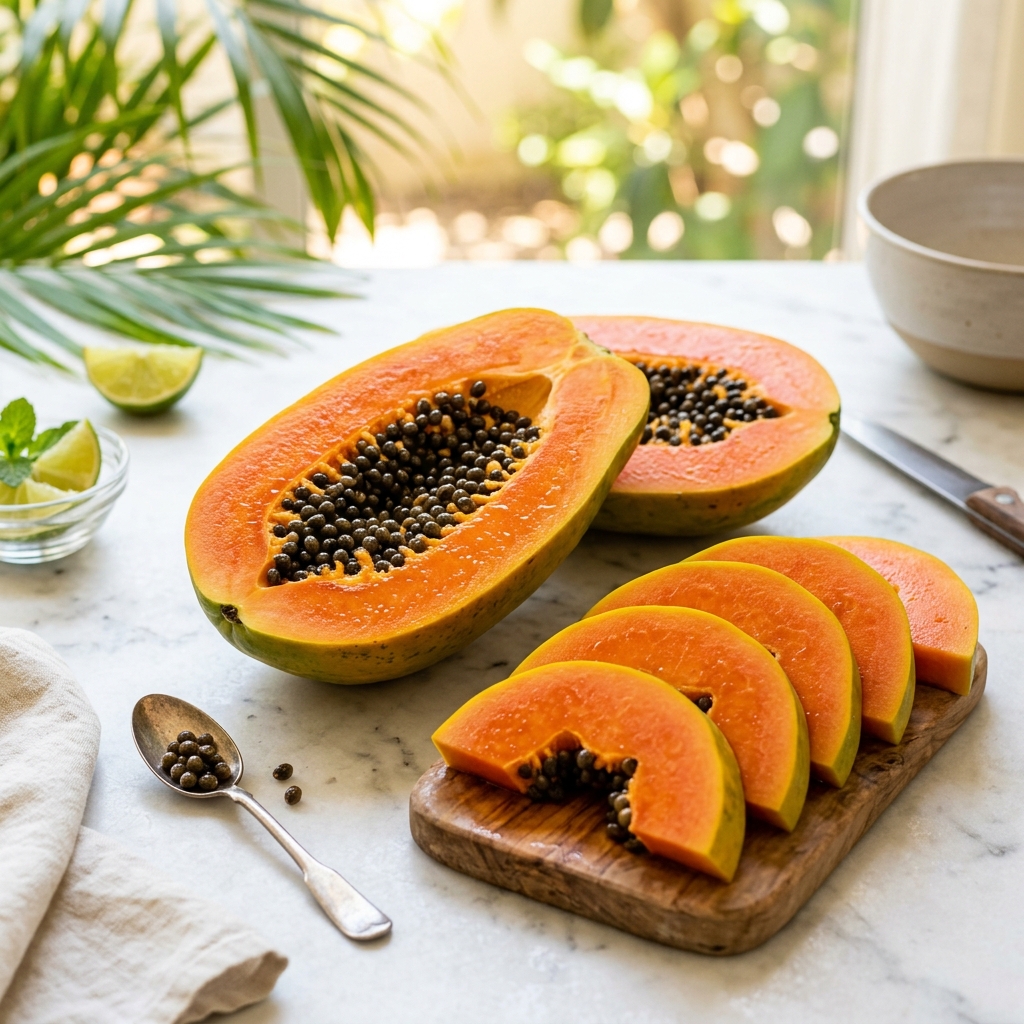
- Golden Ripe Papaya (Pakka Papita): Radiates a warm orange-coral interior, fragrant melon-like aroma, and soft, buttery flesh. Ripe papaya is eaten fresh, squeezed with a touch of fresh lime juice, or folded into fruit salads.
🧪 The Papain Enzyme Secret: How Papaya Breaks Down Heavy Proteins
Have you ever wondered why you feel so remarkably light and refreshed after eating a bowl of fresh papaya? The secret lies in a unique proteolytic enzyme called papain:
💡 The Science of Papain:
- Breaks Complex Peptide Chains: Papain is so potent at breaking down tough protein fibers that culinary chefs worldwide use pure papaya extract to soften tough cuts of meat.
- Assists Sluggish Digestion: In the human stomach, papain works in harmony with your natural gastric juices. If your body struggles to digest heavy lentils, dairy proteins, or meat, papain helps cleave protein molecules into readily absorbable free amino acids, preventing the heavy, bloated “brick in the stomach” sensation.
🌅 The Morning Empty Stomach Routine (Natural Gut Cleanse)
In traditional Indian home wellness, one of the most trusted habits for optimal digestion is eating a generous bowl of fresh ripe papaya first thing in the morning on an empty stomach. Here is why this routine works wonders:
- Deep Intestinal Hydration: Papaya consists of nearly 88% structured water, providing deep hydration to dry, sluggish intestinal walls after 8 hours of sleep.
- Gentle Soluble Pectin Fiber: The smooth, gel-like soluble fiber gently sweeps through the small and large intestines, stimulating natural peristaltic bowel movement without causing cramping, harsh laxative spasms, or diarrhea.
- Natural De-bloating: Regular morning papaya consumption promotes complete morning evacuation within 30 to 45 minutes, leaving your abdomen feeling flat, comfortable, and energetic all day.
🌱 Can You Eat Papaya Seeds? (The Peppery Superfood)
When slicing open a papaya, most people scrape out the glistening black seeds and toss them in the trash. But these tiny seeds are edible and biologically powerful:
- Peppery, Mustard-Like Flavor: Chewing fresh papaya seeds releases a sharp, pungent, peppery kick similar to wasabi or black mustard seeds.
- Natural Antiparasitic Action: Papaya seeds contain carpaine, a natural alkaloid compound studied for its ability to help cleanse the intestinal tract from harmful microbes and amoebic parasites.
- How to Consume: Start with just 1/4 to 1/2 teaspoon of freshly washed seeds. You can chew them fresh with a teaspoon of raw honey, or dry and grind them in a pepper mill as a zesty salad seasoning. Never consume large handfuls, as excess carpaine can irritate the stomach lining.
📊 Nutrition Facts (What is Inside Papaya?)
Papaya is extraordinarily low in calories while overflowing with essential micronutrients and powerful antioxidants. Here is the breakdown per 100 grams and per 1 cup diced (~145 grams):
| Nutrient | Per 100g Pulp | Per 1 Cup Diced (~145g) | Why Your Body Needs It |
|---|---|---|---|
| Energy | 43 kcal | 62 kcal | Ultra-light, refreshing nourishment |
| Carbohydrates | 10.8 g | 15.7 g | Gentle, low-glycemic fruit energy |
| Dietary Fiber | 1.7 g | 2.5 g (9% DV) | Feeds gut flora & promotes regularity |
| Protein | 0.5 g | 0.7 g | Light plant peptides |
| Vitamin C | 60.9 mg (68% DV) | 88.3 mg (98% DV!) | More Vitamin C per serving than an orange! |
| Vitamin A (Beta-Carotene) | 47 mcg RAE (5% DV) | 68 mcg RAE (8% DV) | Nourishes eyesight and mucous tissues |
| Folate (Vitamin B9) | 37 mcg (9% DV) | 54 mcg (14% DV) | Supports healthy cell replication |
| Lycopene | 1,828 mcg | 2,650 mcg | Potent antioxidant that protects cellular DNA |
🌿 Top 5 Proven Health Benefits of Papaya
1. Rapid Relief from Constipation & Bloating
The combination of active papain enzymes, abundant water content, and soluble pectin fiber restores healthy bowel motility and eliminates trapped gas naturally, without reliance on synthetic laxatives.
2. Superior Vitamin C Defense
A single cup of diced ripe papaya fulfills nearly 100% of your daily Vitamin C needs. This stimulates white blood cells to neutralize circulating pathogens, supports collagen synthesis for joint cartilage, and accelerates wound healing.
3. Youthful Skin Radiance & Sun Shield
Papaya is rich in lycopene and beta-carotene, two powerful carotenoid antioxidants that help protect skin cells against ultraviolet photo-damage and oxidative stress. Enzymes in papaya also help keep your skin looking fresh and luminous.
4. Cardiovascular Protection
The antioxidants Vitamin C, lycopene, and Vitamin E in papaya work synergistically to prevent the oxidation of LDL cholesterol in blood vessels. Oxidized LDL is the primary driver of arterial plaque formation.
5. Natural Heartburn & Gastric Soothing
Unlike highly acidic citrus fruits like lemons and grapefruits, ripe papaya has a gentle, mildly alkaline organic profile that coats and soothes an irritated stomach lining, offering quick relief from heartburn and acid reflux.
⚠️ Important Safety Warning: Pregnancy & Raw Papaya
🚨 Crucial Distinction for Expecting Mothers:
- Raw or Semi-Ripe Green Papaya Must Be Avoided: Unripe green papaya contains high concentrations of a concentrated milky white latex. This latex contains papain enzymes and photochemical compounds that can mimic prostaglandin and oxytocin hormones, which can trigger uterine contractions and potential pregnancy complications. Pregnant women should strictly avoid raw or undercooked green papaya dishes.
- Fully Ripe Orange Papaya: When papaya is completely ripe with soft orange flesh and yellow-orange skin, the latex concentration drops to virtually zero. Ripe papaya is rich in essential vitamins like folate and Vitamin C. While small culinary servings of fully ripe papaya are generally considered safe, expecting mothers should always consult their personal obstetrician.
⚡ Check Your Exact Nutrition & Calories
Want to calculate the exact calories, carbohydrates, and fiber in your custom papaya serving? Use our free interactive tool:
❓ Frequently Asked Questions (FAQ)
Can I eat papaya at night?
Yes, eating a small bowl of ripe papaya after an early dinner can aid digestion. However, avoid eating very large portions right before bedtime, as its high water content can cause nighttime bathroom trips.
Does papaya help with weight loss?
Yes! With only 62 calories and 2.5g of fiber per cup, papaya fills up your stomach volume, delays gastric emptying, and satisfies sweet cravings naturally without adding excess calories or fat.
How can I tell if a papaya is ready to eat?
Look for skin that has turned from dark green to at least 70% to 80% yellow or orange. Press your thumb gently near the base—it should give slightly with a soft, supple feel, just like a ripe avocado.
🔬 Scientific References
- USDA FoodData Central: Carica papaya (Papaya, raw), FoodData Central ID: 171706.
- Journal of Medicinal Food: Papaya preparation in digestive disorders: clinical and experimental evaluation of papain activity. PMID: 23527884.
- British Journal of Nutrition: Effect of Carica papaya seed extract on gastrointestinal motility and parasites.
- Phytotherapy Research: Proteolytic enzymes in food: digestive and physiological mechanisms.
Medical Disclaimer: This guide is intended for informational and educational purposes only. It is not intended to substitute for professional medical advice, diagnosis, or treatment. Always consult a healthcare professional regarding any medical concerns or dietary changes.