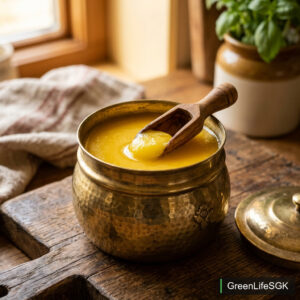
Quick Summary: Homemade Curd (known as Dahi in Hindi) has been the cornerstone of Indian culinary health for over 4,000 years. Unlike ultra-processed supermarket yogurts packed with synthetic thickeners and hidden sugars, authentic homemade curd is a living superfood overflowing with active probiotic bacteria (like Lactobacillus bulgaricus), easily digestible calcium, and bioactive peptides. Discover the earthen clay pot setting secret, why lactose-intolerant people can often enjoy curd, and the crucial golden rules for eating it properly.
📋 Table of Contents
- Curd (Dahi) vs. Commercial Store Yogurt (What is the Difference?)
- The Earthen Clay Pot (Matka) Secret: Why It Makes the Thickest Curd
- How to Set Thick, Creamy Curd in Cold Winter (Step-by-Step)
- The 3 Golden Rules of Eating Curd for Optimal Health
- Why Lactose-Sensitive People Can Easily Digest Curd
- Nutrition Facts (What is Inside a Bowl of Curd?)
- Top 5 Proven Health Benefits of Curd
- Who Should Be Mindful with Curd?
- Frequently Asked Questions
- Scientific References
🔍 Curd (Dahi) vs. Commercial Store Yogurt (What is the Difference?)
While many people use the words “curd” and “yogurt” interchangeably, they are made very differently:
| Feature | Traditional Indian Curd (Dahi) | Commercial Store-Bought Yogurt |
|---|---|---|
| Fermentation Process | Naturally cultured at home using a spoonful of previous day’s curd (jamun / khattai). Contains a wild, biodiverse community of lactic acid bacteria. | Made in industrial factories using isolated, standardized laboratory bacterial strains (primarily Lactobacillus bulgaricus and Streptococcus thermophilus). |
| Heat Treatment | Freshly set without post-pasteurization, ensuring 100% of probiotic bacteria remain alive and active. | Often heat-pasteurized after fermentation to extend shelf-life, which destroys delicate live probiotic cultures. |
| Additives & Thickeners | Zero additives. Just 100% pure milk fermented naturally. | Frequently contains added corn starch, pectin, gelatin, preservatives, and artificial flavors. |
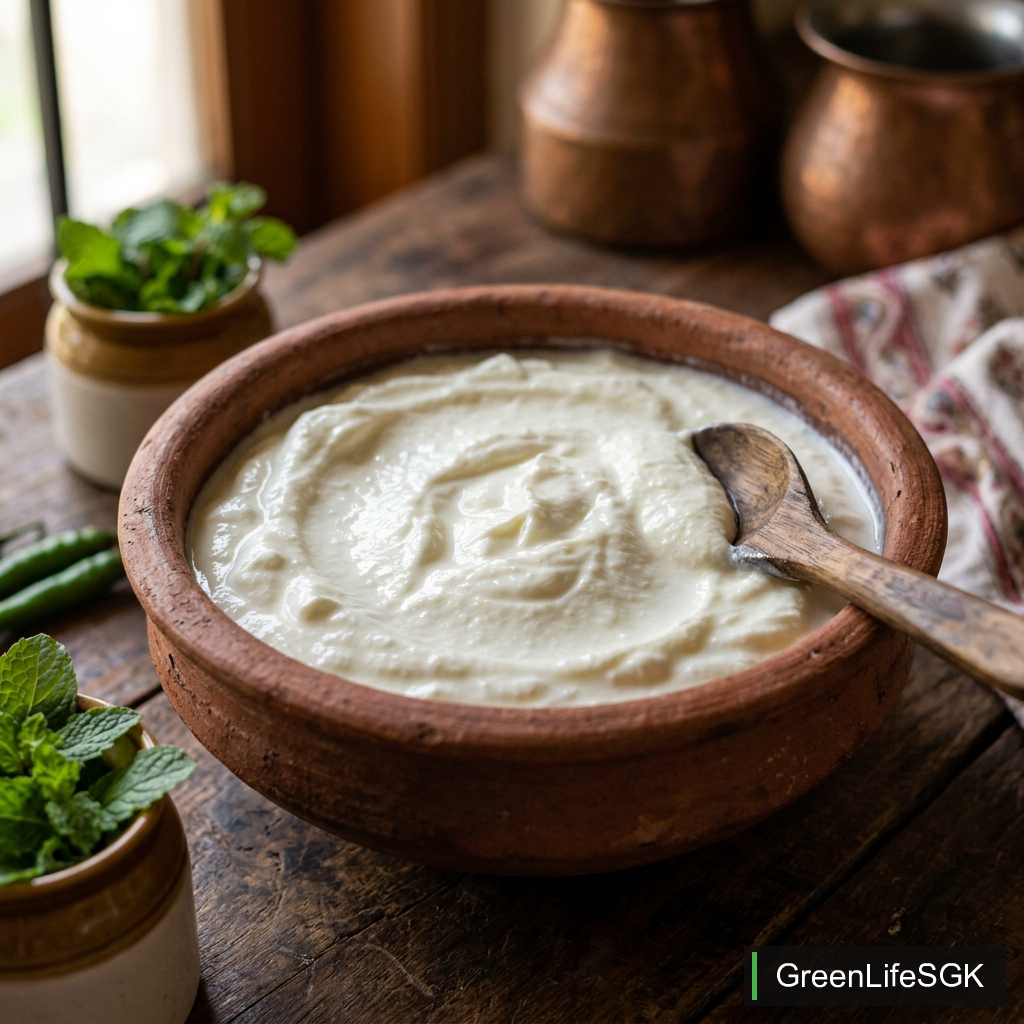
🏺 The Earthen Clay Pot (Matka) Secret: Why It Makes the Thickest Curd
If you have ever tasted curd set inside a traditional unglazed terracotta clay pot (mitti ka bartan), you know it is incomparably thicker, sweeter, and more luxurious than curd set in stainless steel or plastic. Here is the physical science behind it:
💡 Why Clay Pots Create Flawless Curd:
- Natural Whey Evaporation: Unglazed terracotta is microporous. As the curd ferments, the porous clay walls slowly absorb and wick away excess liquid whey through subtle surface evaporation. This concentrates the milk solids naturally, creating dense, spoon-thick curd without needing straining or muslin cloth.
- Alkaline Acid Buffering: Natural clay is alkaline. As bacteria produce lactic acid during fermentation, the clay gently neutralizes harsh sharpness, resulting in a naturally mellow, creamy, sweet-tasting curd that never turns unpleasantly sour.
- Thermal Temperature Stability: Clay provides exceptional thermal insulation, shielding fermenting milk from sudden ambient drafts and temperature swings.
❄️ How to Set Thick, Creamy Curd in Cold Winter (Step-by-Step)
In chilly winter weather, beneficial lactic bacteria become sluggish, causing milk to remain watery or fail to set entirely. Follow this foolproof 3-step winter method:
💡 The Warm-Nest Technique:
- The Pinky Temperature Test: Heat whole milk until lukewarm (42°C to 45°C). Dip your clean pinky finger into the milk: you should be able to hold it there comfortably for a count of 10 seconds. If it feels boiling or scorching, it will scald and kill the starter bacteria; if lukewarm-cool, bacteria will remain dormant.
- Whisk the Starter (Jamun): Add 1 generous teaspoon of fresh, non-sour curd starter into the warm milk. Whisk vigorously for 30 seconds to aerate and distribute the cultures uniformly.
- The Insulated Nest: Place the covered bowl inside an insulated casserole dish, or wrap it tightly in a warm woolen muffler, or set it inside an unheated kitchen oven with only the interior light bulb switched ON. Leave undisturbed for 7 to 8 hours. Once set, transfer immediately to the refrigerator to halt fermentation and firm up the curd.
⚖️ The 3 Golden Rules of Eating Curd for Optimal Health
To maximize the digestive and probiotic gifts of curd, keep these three time-tested rules in mind:
- Rule 1: Never Boil or High-Heat Curd Directly: Boiling curd instantly destroys live probiotic bacteria and causes dairy proteins to separate into gritty curds and water. When making curd-based gravies (like kadhi), temper on gentle, low heat and stir continuously.
- Rule 2: Pair with Roasted Cumin & Black Pepper: In traditional medicine, curd has a cool, heavy, mucous-forming quality. Pairing it with freshly roasted, crushed Cumin Seeds (Jeera) and a pinch of freshly ground Black Pepper stimulates digestive enzymes (agni), preventing heavy bloating or sluggish digestion.
- Rule 3: Avoid Sour Curd Late at Night: If you are prone to nighttime sinus congestion, asthma, bronchitis, or throat phlegm, avoid eating chilled, sour curd right before bedtime. Enjoy curd during lunch when digestive fire is at peak strength.
🥛 Why Lactose-Sensitive People Can Easily Digest Curd
Many individuals who experience bloating, stomach cramps, or gas after drinking a glass of fresh milk find that they can eat fresh curd comfortably with zero issues. Here is why:
- Natural Pre-Digestion: During fermentation, Lactobacillus bacteria feed on the natural milk sugar (lactose) and convert approximately 70% of it into lactic acid.
- Active Lactase Production: Live probiotic cultures in fresh curd continue to secrete small amounts of the enzyme lactase in your digestive tract, assisting your intestines in breaking down any remaining traces of lactose smoothly.
📊 Nutrition Facts (What is Inside a Bowl of Curd?)
Curd is an outstanding source of complete protein, bone-building calcium, and essential Vitamin B12. Here is the nutritional breakdown per 100 grams and per standard medium bowl (~200 grams):
| Nutrient | Per 100g Curd | Per 1 Standard Bowl (~200g) | Why Your Body Needs It |
|---|---|---|---|
| Energy | 61 kcal | 122 kcal | Clean, satiating nourishment |
| Protein | 3.5 g | 7.0 g (14% DV) | Complete amino acid profile (whey & casein) |
| Total Fat | 3.3 g | 6.6 g | Contains beneficial conjugated linoleic acid (CLA) |
| Carbohydrates | 4.7 g | 9.4 g | Pre-digested lactose converted to lactic acid |
| Calcium | 121 mg (12% DV) | 242 mg (24% DV!) | Builds dense bones and protects teeth enamel |
| Phosphorus | 95 mg (10% DV) | 190 mg (19% DV) | Works with calcium for structural bone matrix |
| Vitamin B12 | 0.37 mcg (15% DV) | 0.74 mcg (31% DV!) | Supports nerve myelination and red blood cells |
| Potassium | 155 mg | 310 mg (7% DV) | Maintains electrolyte balance |
🌿 Top 5 Proven Health Benefits of Curd
1. Restores Balanced Gut Microbiome
Fresh curd delivers billions of live colony-forming units (CFUs) of beneficial lactic acid bacteria that survive stomach acid to populate your intestinal lining, outcompeting pathogenic bacteria and restoring gut balance after antibiotics.
2. Builds Dense Bones & Prevents Osteoporosis
One bowl of curd delivers nearly 25% of your daily required calcium along with phosphorus. The lactic acid present in curd lowers intestinal pH, significantly enhancing calcium solubility and absorption into the bloodstream.
3. Cools Internal Acidity & Heartburn
Curd coats an irritated esophagus and stomach lining with a soothing, cooling protective barrier. Consuming fresh curd or a glass of spiced buttermilk (chaas) neutralizes excess stomach acid within minutes.
4. Natural Immune System Shield
Over 70% of the human immune system is located in the gut-associated lymphoid tissue (GALT). By maintaining the physical integrity of the intestinal epithelial barrier, the probiotics in curd help reduce systemic inflammation and fight off seasonal infections.
5. High-Quality Muscle Recovery
With 7 grams of bioavailable protein per bowl containing both fast-digesting whey and slow-digesting casein, curd provides sustained amino acid release to rebuild fatigued muscle fibers after physical work or exercise.
⚠️ Who Should Be Mindful with Curd?
- True Casein Milk Allergies: While lactose-sensitive individuals can usually enjoy curd, individuals with a true, severe immunological allergy to milk protein (casein) must avoid all dairy products.
- Severe Respiratory Flare-Ups: According to traditional clinical experience, individuals during an acute asthma flare-up, deep chest congestion, or severe sinusitis should avoid consuming cold, sour curd late in the evening.
⚡ Check Your Exact Nutrition & Calories
Want to calculate the exact calories, protein, and calcium in your custom curd portion? Use our free interactive tool:
❓ Frequently Asked Questions (FAQ)
Can I eat curd every day?
Yes! Daily consumption of 1 fresh bowl of curd during breakfast or lunch provides continuous probiotic reinforcement for your gut, delivers essential calcium, and aids optimal digestion.
What should I do if my curd turns too sour?
If curd becomes too sour, transfer it into a clean muslin cloth and let the sour whey drain out for 30 minutes. Whisk the thick hung curd with a splash of fresh cold milk, or use it to make tangy Punjabi kadhi or vegetable marinades.
Is curd good for weight loss?
Yes. Curd is rich in protein and calcium, both of which stimulate satiety hormones and prevent sudden hunger cravings, making it a stellar addition to any balanced weight management plan.
🔬 Scientific References
- USDA FoodData Central: Yogurt, plain, whole milk, FoodData Central ID: 171284.
- The American Journal of Clinical Nutrition: Dairy products and bone health: the role of calcium, protein, and probiotic lactic acid fermentation.
- World Journal of Gastroenterology: Probiotics in gastrointestinal disorders: mechanisms of action and clinical evidence. PMID: 25170203.
- Indian Council of Medical Research (ICMR): Nutrient Requirements and Recommended Dietary Allowances for Indians.
Medical Disclaimer: This guide is published for educational and nutritional awareness only. It is not intended to replace personalized medical diagnosis, dietary prescription, or medical treatment. Always consult a certified physician or dietitian regarding personal health questions.