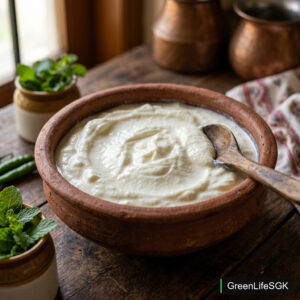
Quick Summary: Desi Ghee (clarified butter) has been the crowned king of Indian kitchens and Ayurvedic wellness for thousands of years. Known as “liquid gold,” a single spoonful poured over steaming dal or hot rotis turns simple food into a feast. Unlike regular butter or refined vegetable oils, pure ghee has a remarkably high smoke point, contains no lactose, and is rich in healthy fats that nourish your gut and brain.
📋 Table of Contents
- What is Ghee?
- Traditional Bilona Ghee vs. Factory Ghee
- Cooking Science: Why Ghee Has the Highest Smoke Point
- Nutrition Facts (What is Inside Pure Ghee?)
- Proven Daily Health Benefits
- How to Store Ghee So It Stays Fresh for 1 Year Without a Fridge
- Cooking Tips: How to Use Ghee in Everyday Indian Meals
- Who Should Be Mindful with Ghee?
- Frequently Asked Questions
- Scientific References
🔍 What is Ghee?
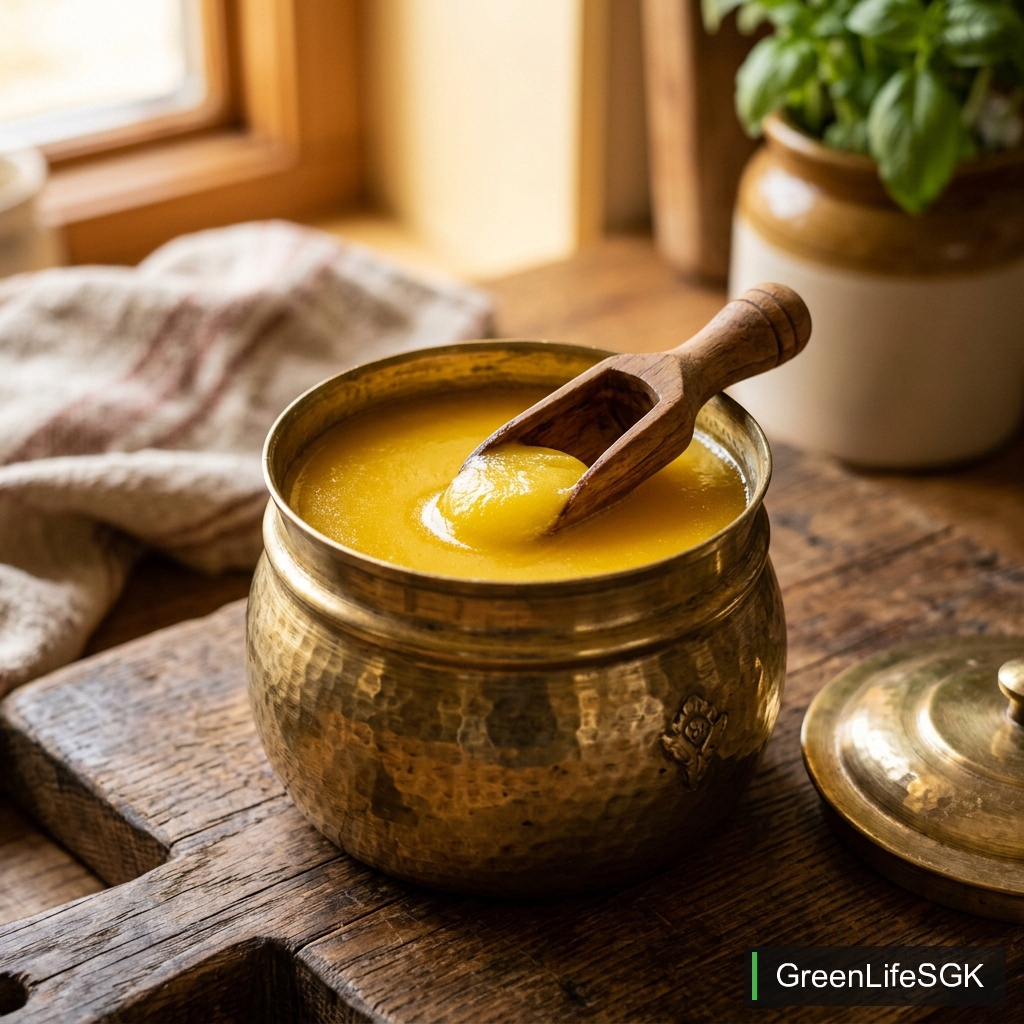
Ghee is clarified butter made by gently simmering churned butter over low heat until all the water evaporates and the milk solids (lactose and whey proteins) separate and settle to the bottom. What remains on top is pure, golden, fragrant liquid fat.
Because the perishable milk sugars and milk solids are completely removed during this gentle cooking process, ghee has a clean, nutty aroma and can sit at room temperature for over a year without spoiling or going rancid.
🌿 Traditional Bilona Ghee vs. Factory Ghee
Not all ghee sold in stores is made the same way. Understanding how your ghee was prepared makes a huge difference in nutrition and taste:
- Traditional A2 Bilona Ghee: The ancient Ayurvedic method. Fresh whole milk from grass-fed indigenous Indian cows (like Gir or Sahiwal) is boiled, cooled, and cultured overnight into whole curd (dahi). The curd is then hand-churned with a two-way wooden churner (called a Bilona) to harvest fresh white butter (makkhan). This cultured butter is slowly simmered on an earthen stove into aromatic, grainy (daanedar) golden ghee. It retains maximum natural fat-soluble vitamins (A, D, E, and K) and gut-healing butyric acid.
- Modern Factory Ghee: Commercial dairy factories usually separate raw cream directly from milk using high-speed industrial machines and boil the uncultured cream under pressure. While it is cheaper and faster to produce, it lacks the deep cultured flavor and rich probiotic benefits of traditional Bilona ghee.
- Buffalo Ghee: White in color, thick in texture, and higher in total milk fat. It is popular in North India for making rich festive sweets, halwas, and pinni.
🧪 Cooking Science: Why Ghee Has the Highest Smoke Point
Have you ever noticed that regular butter quickly turns dark brown and smokes when you heat it in a frying pan? That happens because butter contains water and milk sugars that burn at low temperatures.
💡 Why Ghee is the Safest Fat for Cooking:
- Super High Smoke Point (250°C / 485°F): Most refined seed oils break down around 180°C to 200°C, releasing harmful smoke and free radicals. Pure ghee can be safely heated up to 250°C without breaking down, making it the safest fat for Indian deep-frying (pooris, pakoras) and high-heat tadka.
- Naturally Lactose-Free: Because all milk solids are strained out, pure ghee is virtually 100% lactose-free and casein-free. Most people who cannot digest milk or cheese can comfortably enjoy ghee with zero stomach discomfort.
- Fat-Soluble Nutrient Carrier: In Ayurveda, ghee is called a Yogavahi (catalytic agent). It dissolves fat-soluble vitamins and active spice compounds (like curcumin in turmeric and allicin in garlic) and transports them deep into your body’s cells.
📊 Nutrition Facts (What is Inside Pure Ghee?)
Ghee is a concentrated source of pure dietary energy and fat-soluble vitamins. Here is the nutritional breakdown per 100 grams and per standard kitchen tablespoon (~14 grams):
| Nutrient | Per 100g | Per 1 Tablespoon (~14g) | Why Your Body Needs It |
|---|---|---|---|
| Energy | 900 kcal | 123 kcal | Sustained, slow-burning energy |
| Total Fat | 99.5 g | 13.6 g | Essential fatty acids |
| Saturated Fat | 62 g | 8.5 g | Stable fats resistant to heat damage |
| Monounsaturated Fat | 28 g | 3.8 g | Heart-healthy omega-9 fats |
| Carbohydrates & Sugars | 0 g | 0 g | 100% sugar and carb free |
| Protein (Casein) | 0 g | 0 g | Safe for dairy-protein sensitive people |
| Vitamin A | 840 µg | 115 µg (15% DV) | Crucial for eyesight and immune defense |
| Vitamin E | 2.8 mg | 0.39 mg | Natural antioxidant protection |
| Butyric Acid | 3,200 mg | 450 mg | Feeds cells lining your colon |
Sources: ICMR (National Institute of Nutrition) & USDA FoodData Central.
🌱 Proven Daily Health Benefits
Far from being “bad fat,” consuming pure desi ghee in moderate daily amounts provides proven health advantages:
- Strengthens Gut Lining and Digestion: Ghee is one of nature’s richest dietary sources of butyrate (butyric acid)—a short-chain fatty acid that fuels the cells lining your colon, reduces gut inflammation, and supports regular digestion [1].
- Keeps Joints Lubricated: In traditional wellness, ghee is considered a natural joint lubricant (Snigdha). It helps reduce morning stiffness and supports flexible, comfortable movement.
- Sustained Energy Without Sugar Crashes: Because ghee contains medium-chain triglycerides (MCTs), your liver processes it directly into clean, long-lasting energy without raising your blood sugar or insulin levels.
- Nourishes Skin & Hair: The natural combination of Vitamin A, Vitamin E, and healthy fatty acids locks moisture into dry skin and keeps hair soft from the inside out.
📦 How to Store Ghee So It Stays Fresh for 1 Year Without a Fridge
Unlike milk, cheese, or regular butter, pure ghee should NEVER be stored in the refrigerator! Chilling makes ghee rock-hard, dulls its nutty fragrance, and introduces condensation moisture.
The Golden Storage Rule: Keep ghee in a clean glass, ceramic, or food-grade stainless steel jar in a dark, cool pantry cupboard. Always use a completely dry spoon. A single droplet of water from a wet spoon can cause green mold to sprout in the jar. Kept dry and covered, pure ghee stays fresh for 12 to 18 months at room temperature!
🍳 Cooking Tips: How to Use Ghee in Everyday Indian Meals
Here are the best ways to incorporate ghee into your daily routine:
- The Finishing Spoon on Dal & Khichdi: Add 1 teaspoon of raw warm ghee over your hot dal or khichdi right before eating. This coats the grains, lowers the glycemic response of carbs, and aids smooth digestion.
- For Rotis and Parathas: Brushing fresh hot rotis with a light smear of ghee keeps them soft and pliable for hours inside the casserole.
- The Master Tadka Fat: Use ghee instead of refined seed oil for tempering spices (cumin, mustard, hing, and curry leaves). Ghee absorbs spice aromas far better than vegetable oil.
⚠️ Who Should Be Mindful with Ghee?
Ghee is a nutrient-dense fat, which means moderation is essential:
- Portion Control: Ghee is calorie-dense (approx. 120 calories per tablespoon). If you are on a calorie-restricted weight-loss diet or lead a sedentary lifestyle, stick to 1 to 2 teaspoons (5g to 10g) daily.
- If You Have High Cholesterol or Heart Conditions: Ghee contains saturated fats. While healthy in moderate culinary amounts, individuals with active cardiovascular concerns should consult their physician or dietitian regarding their total daily saturated fat budget.
- Avoid Vegetable Shortening (Dalda / Vanaspati): Beware of cheap “vanaspati” or hydrogenated vegetable fats. Vanaspati contains harmful trans-fats and has none of the natural health properties of real cow milk ghee.
💬 Frequently Asked Questions
Can I eat ghee if I am lactose intolerant?
Yes, in almost all cases. The clarifying process completely separates and removes the milk solids and whey, leaving behind virtually zero lactose and casein. Most lactose-intolerant people enjoy ghee without any issues.
Why does ghee sometimes look grainy (daanedar) and sometimes smooth?
The grainy texture is a sign of high quality! When pure ghee cools down slowly at room temperature, its different natural fatty acids solidify at slightly different speeds, naturally forming soft, delicious grains (called daane). If it cools quickly in cold weather, it appears smooth and uniform.
Can I drink warm water with a teaspoon of ghee in the morning?
Yes. In Ayurvedic tradition, taking 1 teaspoon of warm A2 ghee with a cup of warm water on an empty stomach is practiced to lubricate the digestive tract and promote smooth bowel movements.
📚 Scientific References
- Sharma, H., et al. (2010). The effect of ghee (clarified butter) on serum lipid levels and microsomal lipid peroxidation. Ayu, 31(2), 134–140. NCBI PMC: PMC3215354
- Canani, R. B., et al. (2011). Potential beneficial effects of butyrate in intestinal and extraintestinal diseases. World Journal of Gastroenterology, 17(12), 1519–1528. PubMed: 21472114
- National Institute of Nutrition (ICMR). Nutritive Value of Indian Foods.
⚖️ Simple Disclaimer
The culinary, storage, and nutritional insights on GreenLifeSGK are provided for daily home cooking and wellness education. Food choices support healthy living, but do not replace medical advice or treatments. Consult your doctor or certified clinical dietitian if you have specific dietary restrictions.