Quick Summary: Turmeric (known as Haldi in Hindi) is India’s most treasured golden spice. It gives Indian curries and dals their warm golden color and earthy, comforting flavor. Beyond cooking, turmeric is packed with a natural active compound called curcumin, celebrated for centuries in Ayurveda for soothing inflammation, speeding up healing, and supporting overall vitality.
📋 Table of Contents
- What is Turmeric?
- Famous Indian Turmeric Varieties
- The Golden Milk Secret: Why You Always Need Black Pepper and Fat
- Nutrition Profile (What is Inside Turmeric?)
- Proven Daily Wellness Benefits
- How to Store Turmeric & How to Remove Yellow Stains Fast
- Cooking Tips: When to Add Haldi in Your Tadka
- Who Should Be Careful with Turmeric?
- Frequently Asked Questions
- Scientific References
🔍 What is Turmeric?
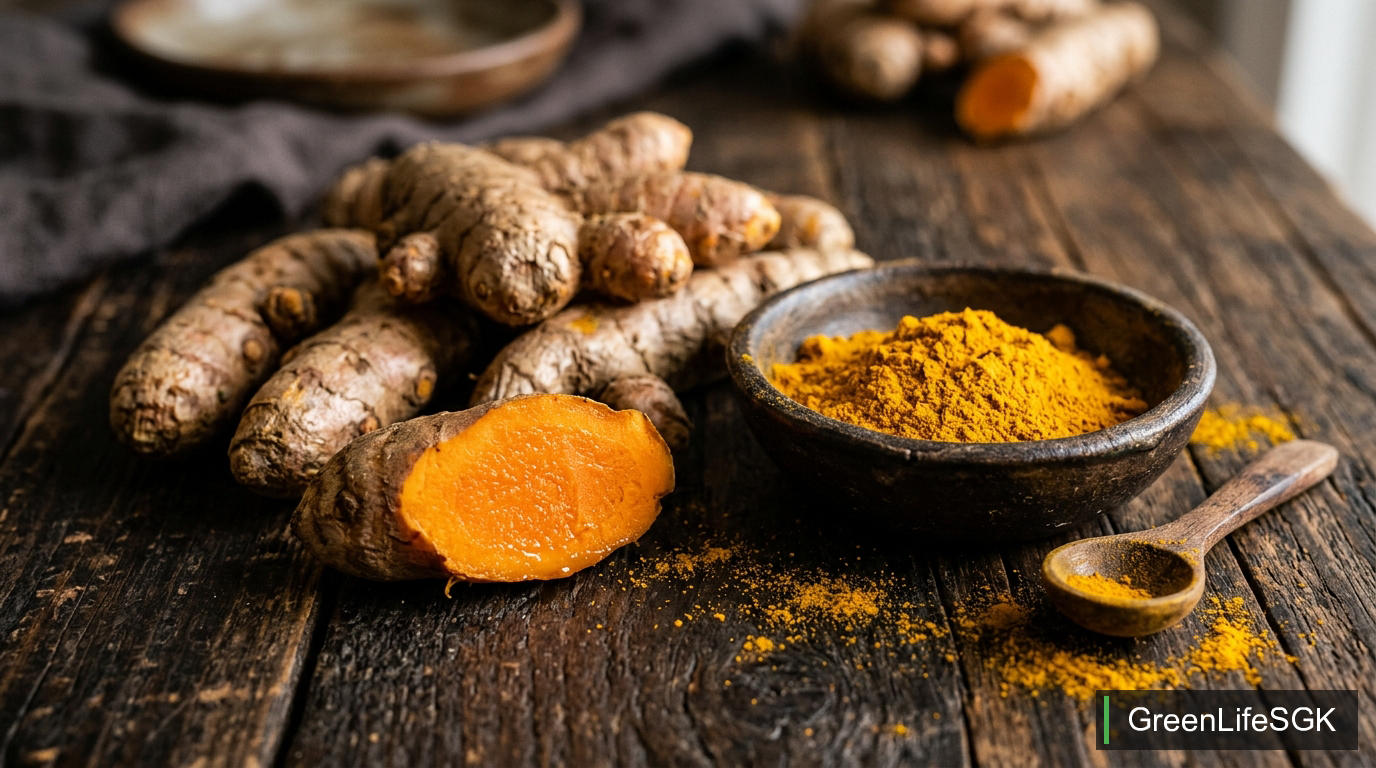
Turmeric comes from the underground root (rhizome) of the Curcuma longa plant, a close relative of ginger. India is the world’s largest producer, consumer, and exporter of turmeric.
Fresh raw turmeric looks very much like ginger on the outside, but when you snap it open, it reveals an intense, fiery-orange core. To make the familiar yellow powder found in every kitchen masala dabba, the fresh roots are boiled, sun-dried, and ground into a silky, fragrant powder that adds warmth, color, and gentle earthiness to our daily meals.
🌿 Famous Indian Turmeric Varieties
India grows some of the highest-quality turmeric in the world. Different regions produce unique varieties with distinct flavors and curcumin strengths:
- Lakadong Turmeric (Meghalaya): Grown in the pristine Jaintia Hills of Meghalaya, this is considered the finest turmeric in the world. While ordinary supermarket turmeric has 2% to 3% curcumin, Lakadong turmeric contains an astonishing 7% to 12% curcumin, giving it a deep reddish-orange shade and unmatched potency.
- Salem Turmeric (Tamil Nadu): The golden-yellow staple of South Indian cooking. It has long, slender roots, a bright sunshine color, and a clean aroma that makes sambar, rasam, and poriyal look vibrant.
- Waigaon Turmeric (Maharashtra – GI Tag): Grown organically in the Wardha district, this variety has a Geographical Indication (GI) tag. It has a rich, earthy aroma and dissolves smoothly without leaving gritty residue.
- Kasturi Manjal (Wild Turmeric): Unlike cooking turmeric, Kasturi Manjal is intensely fragrant and does not stain your skin yellow. In Indian households, it is used exclusively in external beauty packs and face masks for glowing skin.
🧪 The Golden Milk Secret: Why You Always Need Black Pepper and Fat
Many people drink plain turmeric water hoping for miraculous health results, but scientific studies reveal a big surprise: your body absorbs almost zero curcumin on its own. Most of it passes right through your digestive tract unused.
💡 The 2 Science Rules for Maximum Absorption:
- Rule 1 — Always Add a Pinch of Black Pepper: Black pepper contains a natural compound called piperine. Clinical research shows that combining a tiny pinch of freshly cracked black pepper with turmeric boosts curcumin absorption in the blood by up to 2,000% [1]!
- Rule 2 — Always Pair It with Natural Fat: Curcumin is fat-soluble (it cannot dissolve in plain water). It needs healthy dietary fats—like warm whole milk, a spoon of desi ghee, or coconut oil—to dissolve and enter your bloodstream.
This is why ancient Indian grandmothers always prepared Haldi Doodh (Golden Milk) by simmering turmeric in warm, full-fat milk with black pepper and a touch of ghee. Modern science has confirmed their wisdom was 100% correct!
📊 Nutrition Profile (What is Inside Turmeric?)
Turmeric is packed with dietary minerals and plant antioxidants. Here is the nutritional breakdown per 100 grams of pure ground turmeric and per everyday serving (1 teaspoon / ~3 grams):
| Nutrient | Per 100g | Per 1 Teaspoon (~3g) | Why Your Body Needs It |
|---|---|---|---|
| Energy | 312 kcal | 9 kcal | Light in calories |
| Carbohydrates | 67.1 g | 2.0 g | Natural plant carbohydrates |
| Dietary Fiber | 22.7 g | 0.7 g | Supports healthy gut transit |
| Iron | 41.4 mg | 1.2 mg (15% DV) | Crucial for red blood cells |
| Manganese | 7.8 mg | 0.23 mg (10% DV) | Supports natural enzyme function |
| Potassium | 2080 mg | 62 mg | Supports fluid balance & nerves |
| Curcuminoids | 3,000 – 5,000 mg | 90 – 150 mg | Primary active protective compound |
Sources: ICMR (National Institute of Nutrition) & USDA FoodData Central.
🌱 Proven Daily Wellness Benefits
When enjoyed consistently in balanced home cooking, turmeric offers several research-backed benefits:
- Natural Joint & Muscle Comfort: Curcumin helps gently soothe daily joint stiffness and muscle soreness after physical labor or workouts [2].
- Supports Digestion & Liver Function: Turmeric stimulates your gallbladder to release bile, which helps your stomach break down fats and oils efficiently.
- Glowing Skin & Natural Healing: Because of its natural antimicrobial properties, a paste of raw turmeric and curd has been used across Indian homes for centuries to calm breakouts and promote radiant skin.
- Immunity & Seasonal Shield: Warm turmeric milk with honey and pepper remains the gold-standard comfort drink for soothing irritated throats and seasonal congestion.
📦 How to Store Turmeric & How to Remove Yellow Stains Fast
Because turmeric is sensitive to sunlight and moisture, proper storage is essential to preserve its golden color and essential oils:
- Keep Away from Sunlight: Store your turmeric powder in an airtight stainless steel masala dabba or a dark amber glass jar. Direct sunlight fades the vibrant yellow color and degrades the active curcumin.
- Store Fresh Raw Roots in the Fridge: Wrap unpeeled raw turmeric rhizomes loosely in a dry paper towel and place them in a breathable vegetable bag in your refrigerator crisper. They will stay firm and fresh for up to 4 weeks.
- How to Remove Yellow Turmeric Stains from Clothes: Rinse immediately with cold water. Rub liquid dish soap directly into the fabric, let it sit for 20 minutes, wash, and dry the damp garment under bright direct sunlight. The sun’s UV rays naturally bleach yellow curcumin stains right out of white and light-colored cotton!
- How to Clean Kitchen Countertops: Make a thick paste of baking soda and a few drops of dish soap or lemon juice. Rub gently over the stained kitchen marble or quartz, leave for 10 minutes, and wipe clean with a warm cloth.
🍳 Cooking Tips: When to Add Haldi in Your Tadka
Turmeric powder burns very quickly if it hits smoking-hot oil, giving your curry a dark, bitter aftertaste. Follow this simple kitchen rule:
The Golden Tadka Rule:
- Fry your whole seeds (mustard, cumin) and aromatics (onions, ginger, garlic) first.
- Once the onions turn translucent or golden, lower the heat to medium-low.
- Add your turmeric powder (along with coriander and red chili powder) directly into the warm oil.
- Sauté for just 15 to 20 seconds to cook out the raw flavor.
- Immediately add chopped tomatoes, water, or dal to prevent the delicate spices from scorching.
⚠️ Who Should Be Careful with Turmeric?
Cooking with normal amounts of turmeric (1/4 to 1/2 teaspoon per dish) is safe for everyone. However, you should exercise caution with large therapeutic doses or concentrated pills:
- If You Have Gallstones: Turmeric encourages the gallbladder to contract. If you have active gallstones or a blocked bile duct, avoid high-dose supplements.
- If You Take Blood-Thinning Medications: Curcumin has gentle natural anti-clotting effects. If you take medicines like Warfarin or have surgery scheduled in the next 2 weeks, consult your doctor.
- If You Are Prone to Kidney Stones: Turmeric contains moderate levels of soluble oxalates. People prone to calcium-oxalate kidney stones should enjoy it moderately in cooking rather than taking high-dose supplements.
- Safe Daily Amount: 1/2 to 1 teaspoon (1.5g to 3g) of pure turmeric powder daily in your food and drinks is safe and beneficial for healthy adults.
💬 Frequently Asked Questions
Is fresh raw turmeric better than dried turmeric powder?
Both are wonderful. Fresh raw turmeric contains natural moisture and volatile aromatic oils (turmerones) that give a brighter, citrusy taste to teas and pickles. Dried turmeric powder provides a more concentrated source of curcumin per teaspoon and is ideal for daily cooked gravies.
Can I drink turmeric milk every night?
Yes. A warm cup of golden milk (1/4 teaspoon turmeric, a pinch of black pepper, and warm milk) before bed is a gentle, comforting tradition that helps relax the body and promotes restful sleep.
How can I tell if my turmeric powder is pure or adulterated?
Mix 1/2 teaspoon of turmeric powder in a glass of warm water and leave it undisturbed for 20 minutes. Pure turmeric slowly settles at the bottom of the glass, leaving the water clear and light yellow above. If the water turns cloudy, bright artificial yellow, or leaves chalky residue, it may contain added starches or synthetic dyes.
📚 Scientific References
- Shoba, G., et al. (1998). Influence of piperine on the pharmacokinetics of curcumin in animals and human volunteers. Planta Medica, 64(4), 353-356. PubMed Study: 9619120
- Hewlings, S. J., & Kalman, D. S. (2017). Curcumin: A review of its effects on human health. Foods, 6(10), 92. NCBI PMC Study: PMC5664031
- National Institute of Nutrition (ICMR). Nutritive Value of Indian Foods.
⚖️ Simple Disclaimer
The information and cooking suggestions on GreenLifeSGK are provided for daily home culinary education. Natural foods and spices support daily wellness but are not intended to diagnose, treat, or replace medical care. If you have any medical condition or are taking prescription medications, please speak with your doctor or registered dietitian.