Quick Summary: Ginger (known as Adrak in Hindi) is the heartbeat of Indian hospitality and comfort cooking. From the steaming morning cup of Adrak Wali Chai to sizzling curry pastes, ginger brings a fresh, spicy, and zesty warmth to our tables. In Ayurveda, it is known as the “universal home remedy” for its unmatched power to calm upset stomachs, ease bloating, and soothe seasonal coughs.
📋 Table of Contents
- What is Ginger?
- Popular Indian Ginger Varieties (Fresh vs. Sonth)
- The Flavor Science: Why Cooked Ginger Tastes Sweeter Than Raw
- Nutrition Facts (What is Inside Ginger?)
- Proven Health & Digestion Benefits
- How to Store Fresh Ginger for 2 Months (Plus the Spoon Peeling Trick)
- The Secret to Making the Perfect Adrak Wali Chai
- Everyday Cooking: Slicing vs. Grating vs. Paste
- Who Should Be Careful with Ginger?
- Frequently Asked Questions
- Scientific References
🔍 What is Ginger?
Ginger (Zingiber officinale) is an underground root (rhizome) native to tropical South Asia. It has been grown and cherished in Indian kitchens for over 4,000 years.
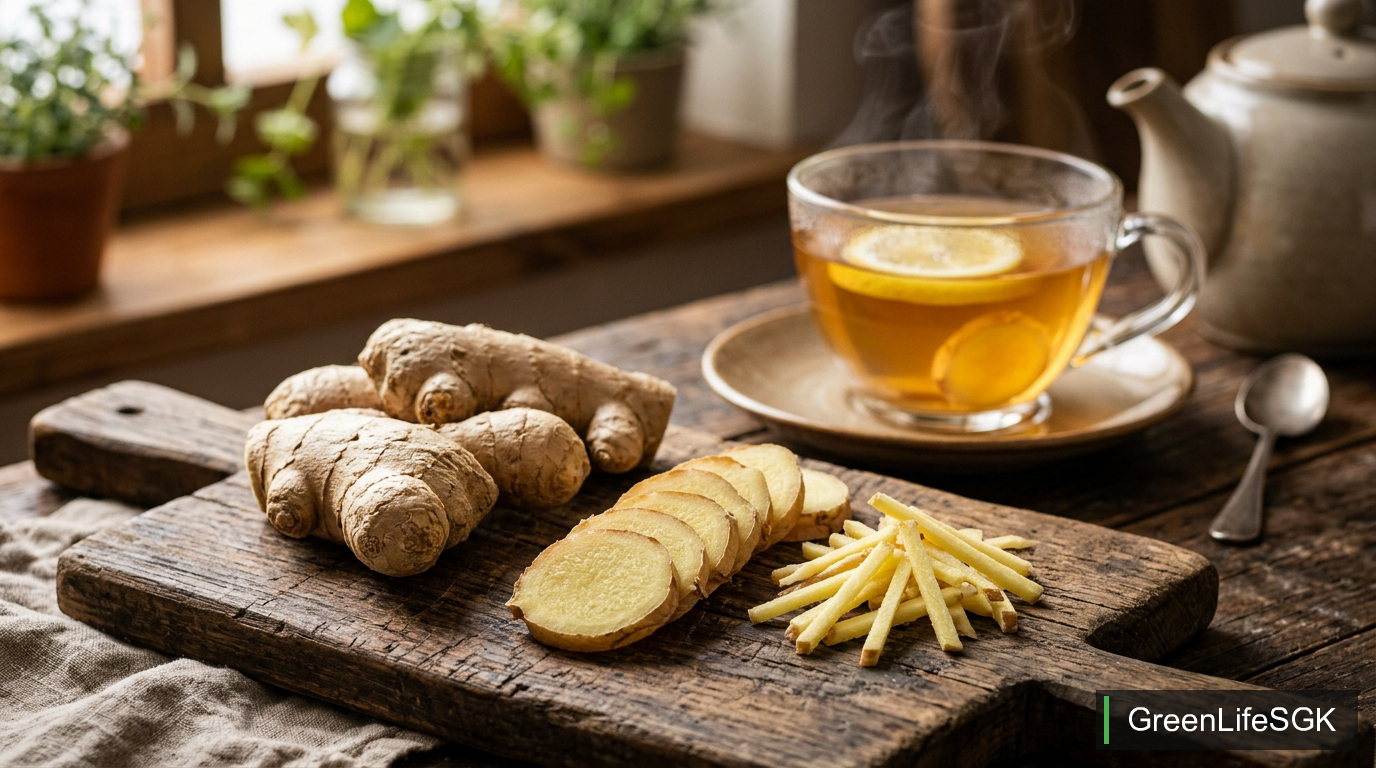
A fresh ginger rhizome has a knobby, bumpy shape with light tan, paper-thin skin and pale yellow, fibrous flesh. When you slice it open, tiny droplets of aromatic essential oils release an unmistakable peppery, citrusy perfume that instantly stimulates your appetite and awakens your senses.
🌿 Popular Indian Ginger Varieties (Fresh vs. Sonth)
India is the largest grower of ginger in the world. Depending on where it is harvested, ginger offers different levels of juice, fiber, and spiciness:
- Cochin Ginger (Kerala): Internationally famous for its clean lemon-peppery aroma and light golden skin. It has very little tough fiber, making it the top variety for making smooth ginger-garlic paste and gourmet ginger preserves.
- Nadia Ginger (West Bengal & Assam): Large, plump, and full of refreshing juice. It is the most popular variety found in East and North Indian vegetable markets, ideal for grating into everyday dals and stir-fries.
- Maran Ginger (South India): Features small, slender roots packed with strong pungent oils. It is widely used in South Indian ayurvedic formulations and tangy ginger chutneys (Inji Puli).
- Dry Ginger (Sonth / Shunti): When fresh ginger is peeled and sun-dried, it turns into Sonth. In Indian traditional food science, dry ginger is considered lighter on digestion than raw ginger and is a staple in winter laddoos, kadhas, and digestive churnas.
🧪 The Flavor Science: Why Cooked Ginger Tastes Sweeter Than Raw
Ever wonder why biting into raw ginger feels like an explosion of spicy heat, while ginger simmered in a stew tastes mellow, warm, and comforting?
💡 The Chemistry Behind the Flavor:
- Fresh Ginger (Gingerols): Raw ginger contains active compounds called gingerols. They give that sharp, fresh, tingling heat on your tongue that clears your sinuses.
- Cooked or Dried Ginger (Shogaols): When you heat or dry ginger, gingerols transform into shogaols and zingerone. Shogaols produce a deeper, rounder, sweeter heat that warms your chest and stomach rather than burning your tongue.
📊 Nutrition Facts (What is Inside Ginger?)
Ginger is practically calorie-free in everyday cooking amounts, but it provides a dense supply of natural plant compounds. Here is the nutritional breakdown per 100 grams of raw ginger and per 1-inch slice (~6 grams):
| Nutrient | Per 100g | Per 1-Inch Slice (~6g) | Why Your Body Needs It |
|---|---|---|---|
| Energy | 80 kcal | 5 kcal | Virtually zero calories |
| Carbohydrates | 17.8 g | 1.1 g | Natural plant carbohydrates |
| Dietary Fiber | 2.0 g | 0.12 g | Supports healthy gut transit |
| Protein | 1.8 g | 0.1 g | Trace plant protein |
| Vitamin C | 5.0 mg | 0.3 mg | Supports natural defense |
| Potassium | 415 mg | 25 mg | Helps maintain fluid balance |
| Magnesium | 43 mg | 2.6 mg | Supports muscle relaxation |
| Gingerols | 1,000 – 1,500 mg | 60 – 90 mg | Primary active digestive compound |
Sources: ICMR (National Institute of Nutrition) & USDA FoodData Central.
🌱 Proven Health & Digestion Benefits
Modern clinical studies confirm that adding fresh ginger to your daily routine brings real, measurable wellness benefits:
- Soothes Nausea and Motion Sickness: Multiple medical trials have proven that ginger is one of the most effective natural ways to calm feelings of nausea, morning sickness, and travel motion sickness [1].
- Speeds Up Stomach Emptying: If you feel heavy or uncomfortably bloated after eating a large meal, ginger stimulates your stomach muscles to empty food faster into the small intestine [2].
- Calms Sore Throats and Coughs: Sucking on a small slice of ginger with a pinch of black salt or sipping hot ginger tea relaxes the bronchial muscles and helps loosen thick phlegm.
- Natural Muscle and Joint Relief: Regular daily consumption helps reduce exercise-induced muscle soreness and mild morning joint stiffness.
📦 How to Store Fresh Ginger for 2 Months (Plus the Spoon Peeling Trick)
Ginger can dry out into a shriveled woody twig or rot with white mold if left uncovered on your counter. Use these two kitchen hacks:
The Spoon Peeling Trick: Never peel ginger with a vegetable peeler or chef’s knife! You end up cutting away 20% to 30% of the usable ginger, wasting the most aromatic oil layer located directly under the skin. Instead, take an ordinary stainless steel teaspoon and scrape the edge against the ginger skin. The skin peels off like tissue paper, leaving 100% of the ginger intact!
- The Water Jar Method (Fresh for 4 to 6 Weeks): Place whole, peeled or unpeeled ginger pieces inside a clean glass jar, fill it with filtered water, screw on the lid, and keep it in your fridge. Change the water once a week. Your ginger will stay crisp, juicy, and fresh for over a month!
- The Freezer Method (Keeps for 6 Months): Wash and dry whole unpeeled ginger roots thoroughly. Place them in a freezer zip-lock bag and store in the freezer. When cooking, you don’t even need to thaw it—simply take the frozen root and grate it directly with a microplane right into your pan!
☕ The Secret to Making the Perfect Adrak Wali Chai
Many people make a common error when preparing Indian ginger tea: they crush ginger and toss it into boiling milk, which can sometimes curdle the milk or produce a dull, weak flavor. Here is the authentic chai shop method:
The Perfect Adrak Chai Order:
- Bring 1 cup of water to a gentle rolling boil in your saucepan.
- Add 1 inch of freshly crushed or grated ginger (along with crushed cardamom if desired).
- Simmer for 2 full minutes on medium heat. This extracts the spicy gingerols directly into the water.
- Add your black tea leaves (chai patti) and sugar. Boil for another minute until a rich, dark amber color develops.
- Finally, pour in 1/2 to 1 cup of full-fat milk. Bring to a gentle boil, lower the flame, let it rise twice, and strain hot into your cup!
🍳 Everyday Cooking: Slicing vs. Grating vs. Paste
How you prep your ginger completely alters how it behaves in your cooking:
- Julienned (Thin Matchsticks): Best for stir-fries, dal tadka garnish, and pickles. Gives a pleasant crunchy texture and periodic bursts of zesty warmth.
- Thin Coins / Slices: Best for boiling in teas, broths, and clear vegetable soups where you want to infuse aroma without eating the fiber.
- Fine Grated or Paste: Best for Indian curry gravies and marinades. Melts seamlessly into the onion-tomato masala and thickens the gravy base.
⚠️ Who Should Be Careful with Ginger?
Moderate ginger in your food (1 to 2 teaspoons daily) is safe for virtually everyone. However, keep these points in mind for high therapeutic intakes:
- If You Suffer from Acid Reflux: Excessive raw ginger can cause mild heartburn or chest burning. Moderation is key—stick to cooked ginger or gentle teas.
- If You Take Blood-Thinning Medications: Ginger naturally supports smooth blood circulation. If you are taking prescription blood thinners or have surgery planned within 2 weeks, consult your doctor.
- During Pregnancy: Gentle ginger tea (under 1 gram of fresh ginger daily) is widely recommended by doctors for morning sickness, but high-dose concentrated herbal supplements should be avoided.
- Safe Daily Amount: 3 to 4 grams (about 1 to 2 inches) of fresh ginger daily in your meals and tea is safe, refreshing, and gentle on the body.
💬 Frequently Asked Questions
Do I always need to peel ginger before cooking?
If you are using young, tender ginger with thin paper skin, you can simply wash it thoroughly and grate or crush it with the skin on. For older ginger with thick, papery, or dirty skin, scraping with a spoon is recommended.
Can I drink ginger tea every day?
Yes. 1 to 2 cups of freshly brewed ginger tea daily is a wonderful, soothing routine that improves digestion, prevents afternoon sluggishness, and warms the body.
Is dry ginger powder (Sonth) hotter than fresh ginger?
Yes. Because the drying process converts gingerol into shogaol, dry ginger powder has a more concentrated, dry, throat-warming heat. When substituting in recipes, use only 1/4 teaspoon of ginger powder for every 1 tablespoon of freshly grated ginger.
📚 Scientific References
- Viljoen, E., et al. (2014). A systematic review and meta-analysis of the effect and safety of ginger in the treatment of pregnancy-associated nausea and vomiting. Nutrition Journal, 13, 20. PubMed: 24642205
- Hu, M. L., et al. (2011). Effect of ginger on gastric motility and symptoms of functional dyspepsia. World Journal of Gastroenterology, 17(1), 105–110. NCBI PMC: PMC3016669
- National Institute of Nutrition (ICMR). Nutritive Value of Indian Foods.
⚖️ Simple Disclaimer
The culinary, storage, and health information on GreenLifeSGK is provided for general kitchen knowledge and everyday wellness. Natural food ingredients support your body but should never replace medical treatments or doctor advice. If you have specific health conditions or take prescription drugs, consult your healthcare provider.