Quick Summary: Cumin Seeds (known as Jeera in Hindi) are the undisputed soul of the Indian spice box. The magical sound of whole jeera crackling in warm ghee signals that something delicious is about to happen in the kitchen. Beyond its rich, earthy, and warm aroma, cumin is India’s most trusted natural digestive spice, stimulating salivary enzymes, relieving bloating, and soothing the stomach with every pinch.
📋 Table of Contents
- What are Cumin Seeds?
- Indian Cumin Varieties: Regular Jeera vs. Shahi Jeera
- The Tempering Secret: How to Crackle Jeera Without Burning
- Nutrition Facts (What is Inside Cumin?)
- Proven Health & Digestion Benefits
- Morning Jeera Water: The 5-Minute Digestive Remedy
- Bhuna Jeera Powder: The Secret Flavor Enhancer for Raita & Chaat
- How to Store Cumin Seeds So They Never Lose Their Aroma
- Who Should Be Mindful with Cumin?
- Frequently Asked Questions
- Scientific References
🔍 What are Cumin Seeds?
Cumin (Cuminum cyminum) comes from the dried seed of a slender plant in the parsley family. India produces over 70% of the world’s cumin, with Gujarat and Rajasthan being the primary harvesting hubs.
Each tiny seed has eight distinct longitudinal ridges containing volatile essential oils (primarily cuminaldehyde). When the seeds are warmed in oil or dry-roasted, these essential oils burst open, filling the air with a warm, nutty, earthy fragrance that defines Indian comfort food.
🌿 Indian Cumin Varieties: Regular Jeera vs. Shahi Jeera
In Indian cuisine, you will encounter two very distinct types of cumin:
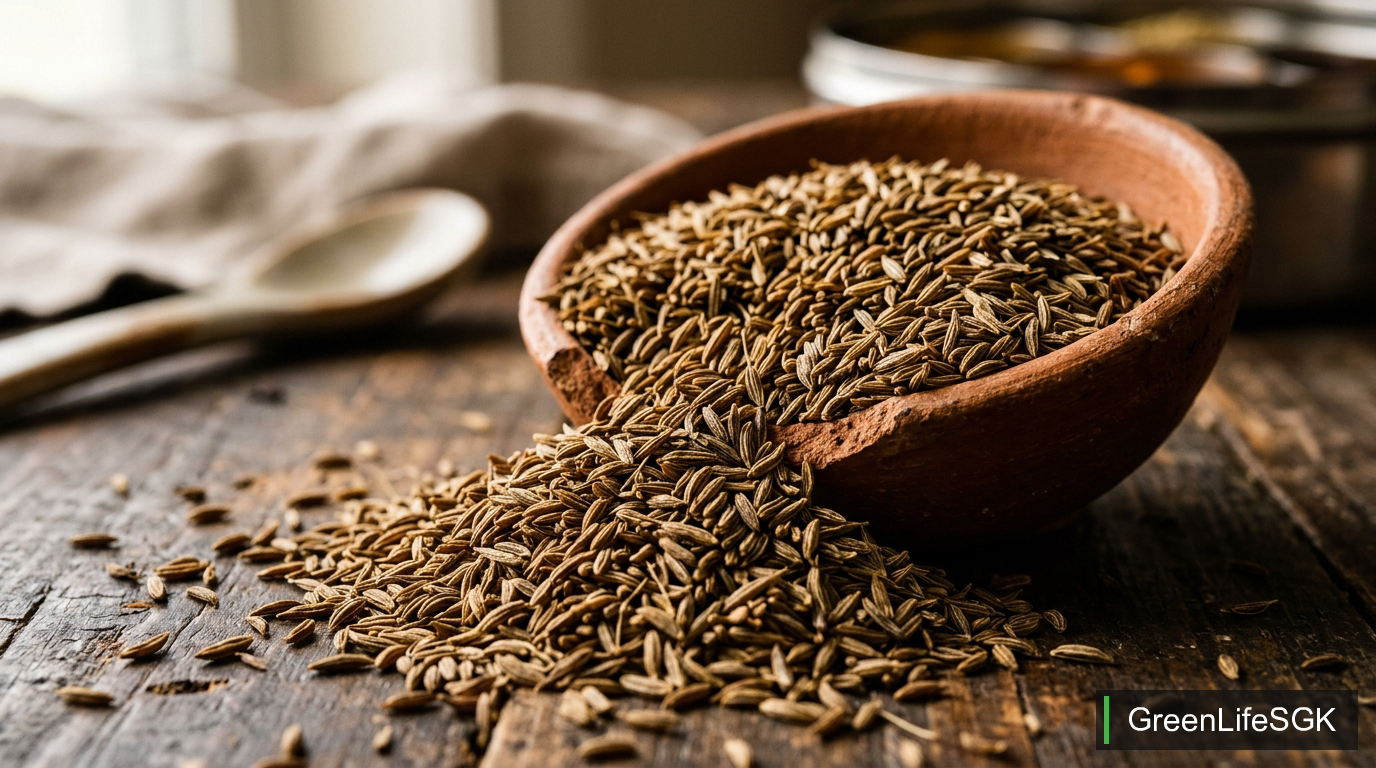
- Regular Desi Jeera (White / Brown Cumin): The classic everyday spice. Yellowish-brown in color, boat-shaped, with a warm, earthy pungency. It is the core spice used for everyday dal tadka, jeera rice, and dry vegetable sabzis.
- Shahi Jeera (Caraway / Black Royal Cumin): Darker, thinner, and more curved than regular jeera. It has a sweet, floral, almost aniseed-like aroma and is used in royal Mughlai cooking, biryanis, garam masala blends, and rich rich stews.
🧪 The Tempering Secret: How to Crackle Jeera Without Burning
Many cooks drop cumin seeds into smoking hot oil, causing them to turn black and bitter within 3 seconds. Scorched cumin ruins the entire dish.
💡 The 30-Second Tempering (Tadka) Rule:
- Test the Oil Temperature: Heat your ghee or oil over medium heat. Drop just 2 or 3 cumin seeds into the pan. If they sizzle gently and float to the surface, the oil is at the perfect temperature (around 160°C).
- Let Them Sizzle for 15 Seconds: Add the rest of your cumin seeds. They should dance, crackle softly, and turn a warm golden-brown shade without turning dark or smoking.
- Add Aromatics Immediately: As soon as the seeds turn golden and release their rich nutty perfume, immediately add your chopped ginger, garlic, or onions to drop the pan temperature and lock in the flavor!
📊 Nutrition Facts (What is Inside Cumin?)
Though consumed in small culinary pinches, cumin is an exceptionally rich source of dietary iron and plant antioxidants. Here is the breakdown per 100 grams and per 1 teaspoon (~3 grams):
| Nutrient | Per 100g | Per 1 Teaspoon (~3g) | Why Your Body Needs It |
|---|---|---|---|
| Energy | 375 kcal | 11 kcal | Light in calories |
| Iron | 66.4 mg | 2.0 mg (25% DV) | Remarkable natural plant iron source |
| Dietary Fiber | 10.5 g | 0.3 g | Aids digestive enzyme production |
| Calcium | 931 mg | 28 mg (3% DV) | Bone strength and mineral balance |
| Magnesium | 366 mg | 11 mg (3% DV) | Supports nerve and muscle function |
| Cuminaldehyde | 2,000 – 3,500 mg | 60 – 100 mg | Primary active digestive essential oil |
Sources: ICMR (National Institute of Nutrition) & USDA FoodData Central.
🌱 Proven Health & Digestion Benefits
- Stimulates Digestive Enzymes: The active compound cuminaldehyde triggers salivary glands and stimulates liver bile acids and pancreatic enzymes, helping your stomach break down complex fats and proteins rapidly [1].
- Relieves Bloating & Flatulence: In Ayurveda, cumin is classified as Deepana (appetite stimulator) and Pachana (digestive). It prevents trapped gas and eases abdominal heaviness after rich meals.
- Outstanding Source of Iron: Just 1 teaspoon of cumin provides nearly 20% to 25% of your daily iron requirement, making it a great natural spice for supporting healthy red blood cell production.
- Supports Healthy Blood Sugar: Clinical trials show that daily cumin intake helps support insulin sensitivity and balances post-meal glucose spikes [2].
☕ Morning Jeera Water: The 5-Minute Digestive Remedy
A simple Indian home remedy for waking up a sluggish metabolism and soothing acid reflux:
- Add 1 teaspoon of whole cumin seeds to 1.5 cups of water in a small pan.
- Bring to a gentle boil on medium heat for 3 to 4 minutes until the water turns a warm golden-amber color.
- Strain into a cup and let it cool until pleasantly warm.
- Sip slowly first thing in the morning. For extra digestive comfort, add a squeeze of fresh lemon juice!
🧂 Bhuna Jeera Powder: The Secret Flavor Enhancer for Raita & Chaat
Never use raw cumin powder in curd or raita! Raw cumin tastes dusty and flat. Follow the traditional street-food vendor secret:
How to Make Fresh Bhuna Jeera: Dry-roast 4 tablespoons of whole cumin seeds in a clean heavy skillet on low-medium flame for 4 minutes until they turn a dark chocolate-brown color and release a smoky, intoxicating aroma. Let them cool, then crush coarsely in a mortar and pestle. Sprinkle over dahi bhalla, cucumber raita, fruit chaat, or buttermilk for instant gourmet flavor!
📦 How to Store Cumin Seeds So They Never Lose Their Aroma
Whole cumin seeds retain their natural essential oils for up to 2 full years when kept in an airtight stainless steel masala dabba or glass jar in a cool, dry pantry away from steam. Ground cumin powder loses its punch within 2 to 3 months, so grind only small batches as needed.
⚠️ Who Should Be Mindful with Cumin?
- Safe Culinary Use: Normal cooking amounts (1 to 2 teaspoons per dish) are safe and nourishing for everyone.
- Blood Sugar Medications: Because high doses of cumin extract naturally support lower blood glucose, diabetics taking insulin or oral medication should monitor their levels when taking concentrated supplements.
💬 Frequently Asked Questions
Can I boil cumin seeds with ginger for tea?
Yes! Jeera-Adrak tea is one of the most soothing natural herbal drinks for easing winter throat congestion, bloating, and cold hands.
Why does my jeera taste bitter?
Bitter cumin happens when the oil in your pan was too hot, scorching the seeds black. The seeds should be light golden-brown, not charred black.
📚 Scientific References
- Platel, K., & Srinivasan, K. (2004). Digestive stimulant action of spices: a myth or reality? Indian Journal of Medical Research, 119(5), 167–179. PubMed: 15218978
- Jafari, E., et al. (2015). The effect of Cuminum cyminum L. on glycemic control in patients with type 2 diabetes. Complementary Therapies in Clinical Practice, 21(4), 211–214. PubMed: 26559359
⚖️ Simple Disclaimer
The culinary, storage, and nutritional facts on GreenLifeSGK are provided for daily kitchen education and home wellness. Natural spices support good health, but do not replace certified medical treatment. Speak with a healthcare provider for personalized medical advice.