Quick Summary: Garlic (known as Lehsun in Hindi) is one of the most loved spices in Indian cooking. Raw garlic has a strong, sharp bite, but when you cook it in ghee or oil, it turns sweet, nutty, and gives curries and dals their mouth-watering taste. Beyond great flavor, it is packed with natural nutrients that support your heart, digestion, and daily health.
📋 Table of Contents
- What is Garlic?
- Popular Types of Garlic in India
- The 10-Minute Rule: How to Get Maximum Health Benefits
- Nutrition Facts (Calories & Vitamins)
- Proven Daily Health Benefits
- How to Store Garlic So It Never Sprouts or Molds
- Why Does Garlic Turn Green or Blue? (Is It Safe?)
- Cooking Tips: How to Make the Perfect Tadka Without Burning
- Who Should Be Careful with Garlic?
- Frequently Asked Questions
- Scientific References
🔍 What is Garlic?
Garlic belongs to the onion family and has been used in Indian homes for over 5,000 years. In Ayurveda, it is known as Rasona and has always been treated as both a cooking staple and a gentle home remedy.
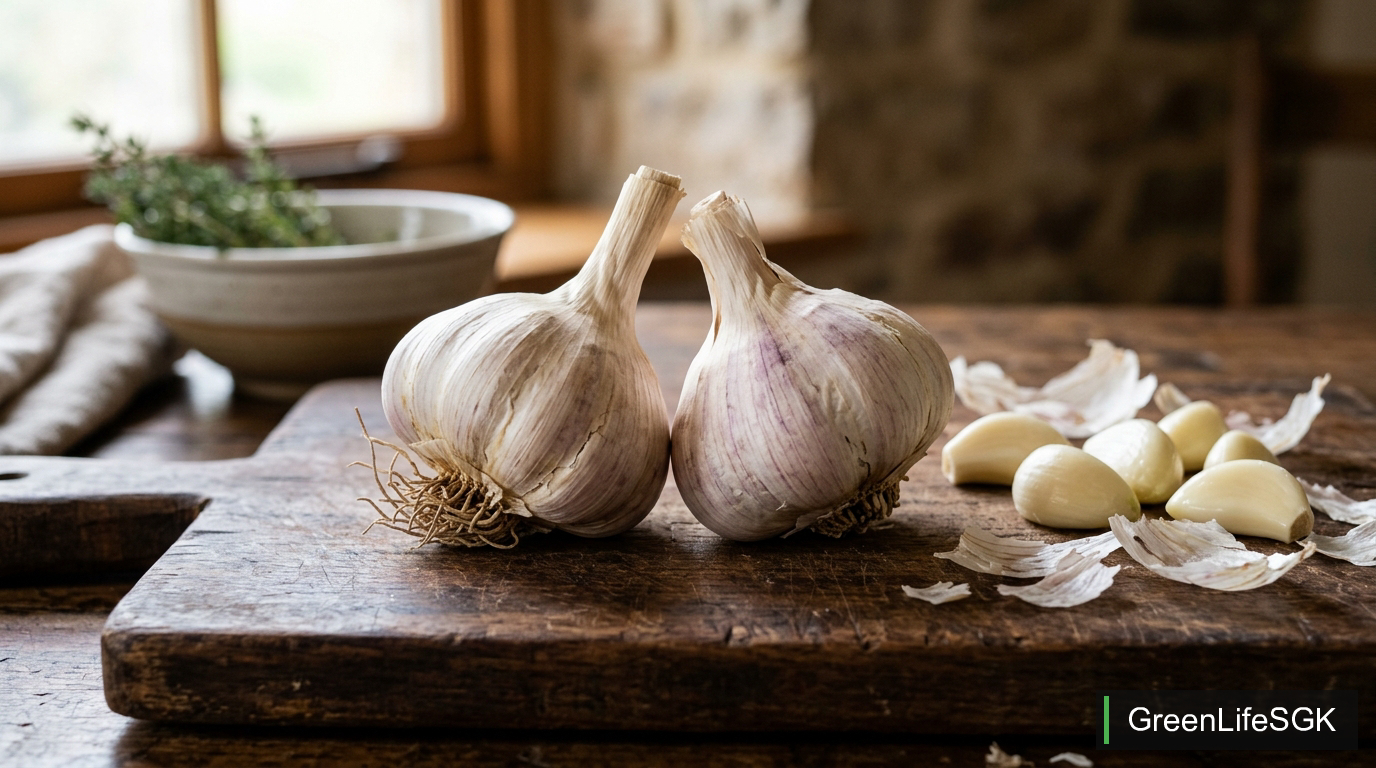
A whole head of garlic is called a bulb, and each piece inside is called a clove. When you eat garlic raw, it has a fiery, pungent kick. But the moment you toss it into warm ghee, mustard oil, or butter, that sharp taste turns into a mellow, savory sweetness that forms the flavor base of almost every Indian curry, soup, and dal.
🌿 Popular Types of Garlic in India
You may see different kinds of garlic in markets across India. Here are the most common types and how they differ:
- Kashmiri Single-Clove Garlic (Ek Pothi Lehsun): This rare garlic grows in the cold mountains of Jammu & Kashmir. Unlike normal garlic, each bulb has only one single round clove inside a hard brown shell. It has a strong herbal smell and is traditionally eaten raw in winter with warm water.
- Yamuna Safed (Desi Regular Garlic): This is the classic white garlic you buy from your local vegetable market. It has small to medium cloves, a strong kick, and thick outer skins that help it stay fresh for up to 6 months.
- Ooty / Hill Garlic: Grown in the cool hills of Tamil Nadu. It has purple-tinted papery skin, very juicy cloves, and extra aroma. It is the top choice across South India for making delicious garlic rasam and long-lasting garlic pickles.
- Elephant Garlic: This variety produces huge cloves—almost 3 times larger than normal garlic. It has a very mild, gentle taste and is great for roasting whole in the oven rather than spicy Indian tadkas.
🧪 The 10-Minute Rule: How to Get Maximum Health Benefits
Many home cooks crush garlic and throw it straight into sizzling hot oil. Science shows that doing this destroys most of its good nutrients before they can help your body.
💡 The Easy 3-Step Trick:
- Whole Garlic Has No Smell: Inside an unbroken clove, the main healthy compound—called allicin—does not exist yet.
- Crushing Starts the Magic: When you chop, crush, or grate a clove, two natural plant parts mix together to create fresh allicin.
- Wait 10 Minutes Before Cooking: Heat can kill this process. If you chop or crush your garlic and let it rest on your cutting board for 10 minutes before heating, the healthy allicin fully develops and stays strong even after cooking.
How You Cut Garlic Changes the Taste:
- Lightly crushed whole cloves: Gives a gentle, subtle garlic flavor (great for simple dal and rice).
- Thinly sliced: Becomes sweet and crispy when fried (great for sprinkling over lentils or sautéed vegetables).
- Fine paste or grated: Gives the strongest flavor and aroma (best for rich gravies, marinades, and chutneys).
📊 Nutrition Facts (What is Inside Garlic?)
Garlic is very low in calories, but full of essential vitamins and minerals. Here is what you get in 100 grams of garlic and in a typical 2-clove serving (about 6 grams):
| Nutrient | Per 100g | Per 2 Cloves (~6g) | Why Your Body Needs It |
|---|---|---|---|
| Calories | 149 kcal | 9 kcal | Very low in calories |
| Carbohydrates | 33.1 g | 2.0 g | Provides natural plant energy |
| Dietary Fiber | 2.1 g | 0.15 g | Helps smooth digestion |
| Protein | 6.4 g | 0.4 g | Plant protein |
| Vitamin C | 31.2 mg | 1.9 mg | Supports immunity and skin |
| Vitamin B6 | 1.24 mg | 0.08 mg | Supports energy and brain health |
| Manganese | 1.67 mg | 0.10 mg | Good for bones and metabolism |
| Selenium | 14.2 µg | 0.85 µg | Natural body defense (antioxidant) |
| Potassium | 401 mg | 24 mg | Helps keep blood pressure balanced |
Sources: ICMR (National Institute of Nutrition) & USDA FoodData Central.
🌱 Proven Daily Health Benefits
Eating 1 to 2 cloves of garlic as part of your everyday home-cooked meals provides several research-backed benefits:
- Helps Blood Flow & Heart Health: Natural sulfur in garlic helps blood vessels relax and widen slightly. This allows blood to flow smoothly and helps maintain healthy blood pressure levels [1].
- Natural Shield Against Seasonal Colds: Garlic has natural germ-fighting properties. This is why sipping hot garlic rasam, clear soup, or garlic-infused tea brings quick comfort when you have a stuffy nose or monsoon cold [2].
- Good for Your Stomach: Garlic contains natural prebiotic fibers (called inulin). These fibers feed the friendly bacteria living in your gut, leading to smoother digestion.
- Natural Cell Protection: The active plant compounds in garlic help fight daily stress on your body cells, keeping you feeling fresh and energetic.
📦 How to Store Garlic So It Never Sprouts or Molds
If your garlic turns soft, black, or grows green sprouts inside your pantry, try these simple storage habits:
- Never Keep Whole Heads in Plastic Bags: Plastic traps moisture inside. In just a few days, trapped dampness will cause black fuzzy mold to grow on the garlic skin.
- Keep It in an Open, Dry Basket: Store whole heads in a wire basket, a mesh bag, or an open bowl in a cool, shaded corner of your kitchen where air can circulate.
- Do Not Put Whole Garlic in the Fridge: Cold temperatures trick the garlic into thinking winter has passed, causing it to sprout green shoots faster. Keep whole garlic at normal room temperature.
- How to Freeze Peeled Cloves for Months: Peel a big batch of cloves on the weekend, toss them with 1 teaspoon of cooking oil, and freeze them in a zip-lock pouch. They will stay fresh and ready to cook for up to 6 months!
❓ Why Does Garlic Turn Green or Blue? (Is It Safe?)
Have you ever chopped fresh garlic, mixed it with lemon juice, vinegar, or ginger paste, and watched it turn a strange green or bluish color? Many people panic and throw it in the trash.
The Simple Answer: It is 100% safe to eat! When garlic touches mild acid (like lemon juice, vinegar, or sour curd), its natural sulfur and minerals react together and make harmless green-blue plant pigments. It is not spoiled, not toxic, and tastes completely normal.
🍳 Cooking Tips: How to Make the Perfect Tadka Without Burning
Garlic has very little water and burns much faster than onions. Burnt garlic turns bitter and ruins the whole dish. Here is the foolproof order to follow:
The Perfect Tadka Steps:
- Heat oil or ghee over medium heat (not smoking hot).
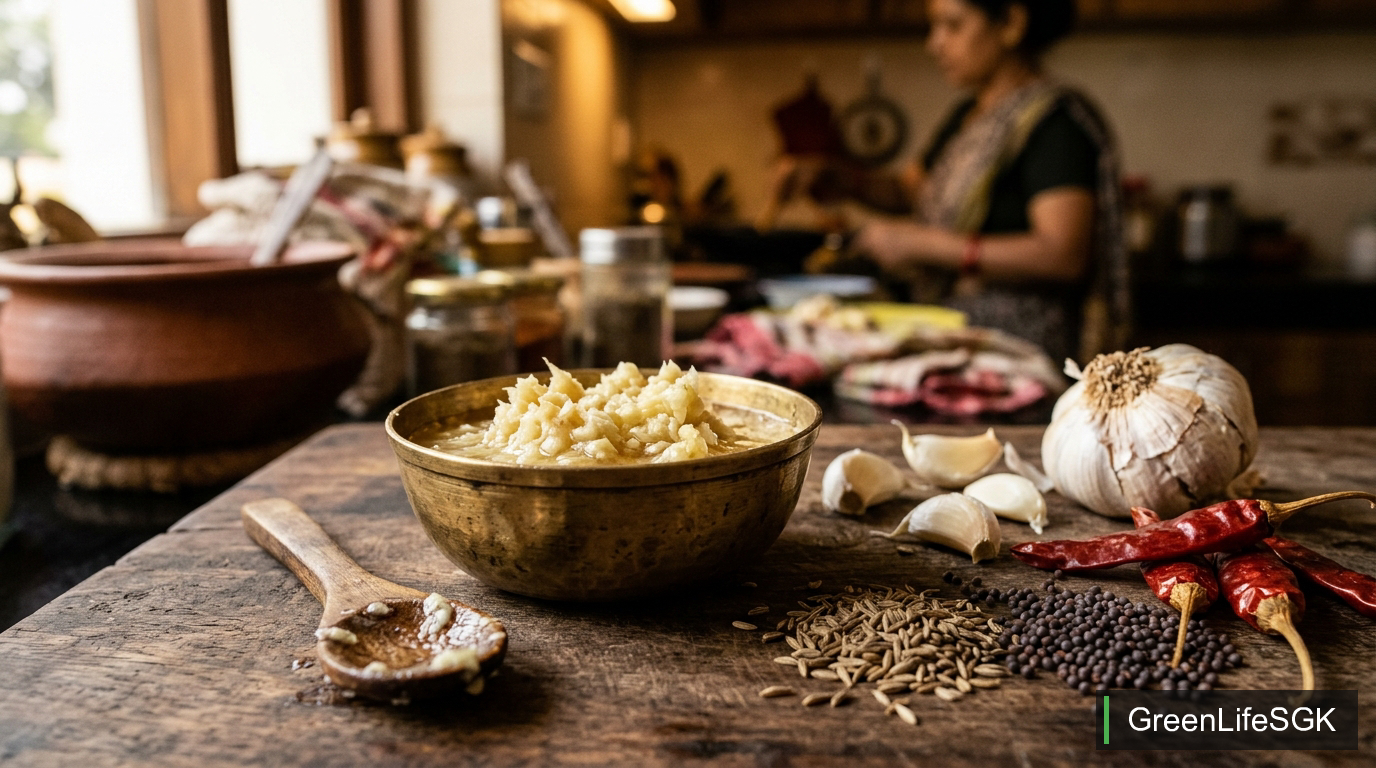
- Add hard seeds first: mustard seeds (rai) and cumin seeds (jeera). Let them crackle.
- Add dried red chilies, then add your crushed or sliced garlic.
- Stir gently for only 30 to 45 seconds until the garlic edges turn a light golden color.
- Immediately add chopped onions, tomatoes, or a splash of water to cool the pan down and stop the garlic from burning.
⚠️ Who Should Be Careful with Garlic?
While garlic is a natural, healthy food, some people should take extra care:
- If You Have Heartburn or Acid Reflux: Raw garlic can cause a burning feeling in the chest or stomach. If you have a sensitive stomach, always eat garlic cooked into your food rather than eating it raw.
- If You Take Blood-Thinning Medicine: Garlic naturally helps blood flow and slows clotting. If you take medicines like Aspirin or Warfarin, or if you have a medical surgery coming up soon, check with your doctor before taking raw garlic home remedies.
- If Garlic Gives You Gas: Some people find raw garlic hard to digest. Sautéing it well in a little ghee with a pinch of hing (asafoetida) makes it much gentler on your stomach.
- Safe Daily Amount: 1 to 2 cloves per day cooked in your daily meals is safe, healthy, and easy on digestion for most people.
💬 Frequently Asked Questions
Can I eat raw garlic with warm water in the morning?
Yes, many people take 1 small crushed clove with water in the morning for seasonal health. If you have an empty stomach, have a small bite of fruit or a sip of milk first so the strong garlic does not irritate your stomach lining.
Can I cook garlic if it has a small green sprout inside?
Yes, absolutely. Green sprouted garlic is completely non-poisonous. The tiny green shoot just has a slightly bitter herbal taste. Simply cut the clove in half lengthwise, flick the green sprout out with your knife, and cook as normal.
How do I get garlic smell off my hands?
Rub your hands against any clean stainless steel item (like a kitchen spoon or your kitchen faucet) under cold running water for 20 seconds. The steel naturally pulls the sulfur smell away from your skin like a magnet!
Is garlic paste from a jar as good as fresh garlic?
Store-bought jarred paste is convenient, but it contains added vinegar and preservatives that change the fresh flavor. Freshly crushed garlic will always give you much better aroma, stronger taste, and richer nutrients.
📚 Scientific References
- Ried, K. (2020). Garlic for healthy blood pressure and heart circulation: An updated scientific review. The Journal of Nutrition. PubMed Study: 26764326
- Bayan, L., et al. (2014). Garlic: A review of potential wellness and health benefits. Avicenna Journal of Phytomedicine. NCBI PMC Study: PMC4103721
- National Institute of Nutrition (ICMR). Nutritive Value of Indian Foods.
⚖️ Simple Disclaimer
The cooking tips and nutritional info on GreenLifeSGK are shared for everyday home cooking and learning. Natural foods are wonderful for daily wellness, but they do not replace doctor-prescribed medical treatments. If you have a medical condition, food allergy, or are taking medications, always speak with your healthcare provider.