Quick Summary: The humble Tomato (known as Tamatar in Hindi) is the savory heartbeat of the Indian kitchen. While botanically a fruit, culinarily it is one of our most indispensable everyday vegetables. Tomatoes are rich in Vitamin C, potassium, and a potent red antioxidant called lycopene. However, human nutritional science reveals an extraordinary secret: unlike most vegetables where raw is considered best, cooking tomatoes in healthy fats actually multiplies their health benefits by over 400%!
📋 Table of Contents
- What is Tomato? Desi vs. Hybrid Varieties in India
- The Cooked Lycopene Miracle: Why Cooked Tomatoes are Healthier
- The Natural Umami Secret: Why Indian Gravies Start with Tomato
- Nutrition Facts (What is Inside a Tomato?)
- Top 5 Proven Health Benefits of Tomatoes
- Storage Science: Why You Must Never Put Unripe Tomatoes in the Fridge
- Who Should Be Mindful with Tomatoes? (Acid Reflux & Joint Sensitivity)
- Frequently Asked Questions
- Scientific References
🔍 What is Tomato? Desi vs. Hybrid Varieties in India
Tomatoes (Solanum lycopersicum) are part of the nightshade family and have become an irreplaceable daily staple across Indian states. In local vegetable mandis, you will encounter two primary varieties:
- Desi Tamatar (Country / Heirloom Tomatoes): Round, slightly ribbed, softer, and intensely juicy with a thin peel. They feature a distinct sour, tangy kick (high in natural citric and malic acids), which creates the signature mouthwatering tartness in traditional curries, rasam, and chutneys.
- Hybrid / Roma / Bangalore Tomatoes: Oval-shaped, firmer, with a thicker skin and meatier pulp. They are less sour, lower in moisture, and provide fantastic deep red color and thick body for restaurant gravies and pasta sauces.
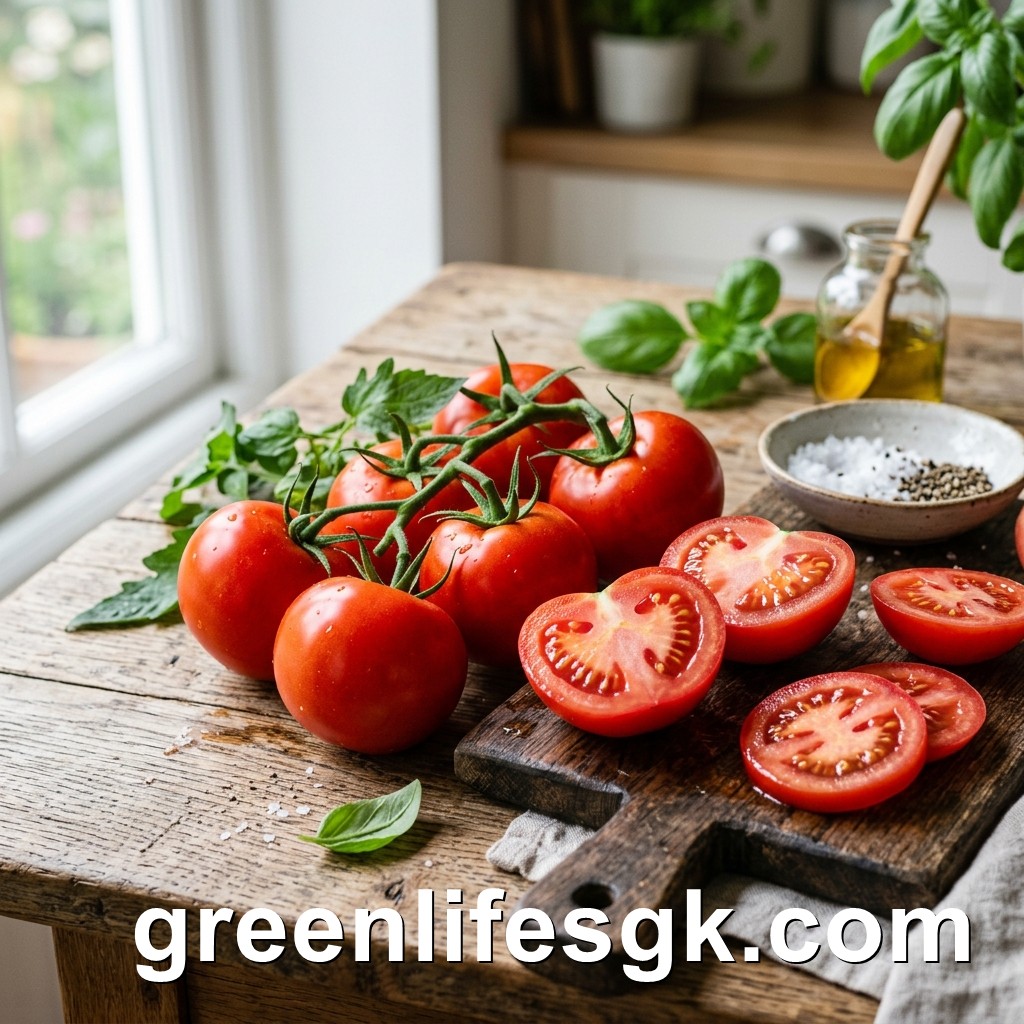
🧪 The Cooked Lycopene Miracle: Why Cooked Tomatoes are Healthier
Many health enthusiasts assume that eating raw vegetables is always superior to cooking them. With tomatoes, modern biochemistry proves the exact opposite:
💡 The Cooking & Fat Synergy:
- Lycopene is Trapped in Raw Flesh: In raw tomatoes, the miracle antioxidant lycopene is locked inside tough plant cell matrix walls in a chemical shape called trans-lycopene, which human intestines absorb poorly.
- Heat Unlocks Absorption: Simmering tomatoes breaks down the cellular walls and converts trans-lycopene into cis-lycopene—the bioavailable form that enters human cells effortlessly.
- Healthy Fats Multiplies It by 400%: Lycopene is 100% fat-soluble. Sautéing your tomato puree in a spoonful of pure Desi Ghee or cold-pressed mustard oil increases lycopene absorption into your bloodstream by over 400% compared to raw tomato slices!
🥘 The Natural Umami Secret: Why Indian Gravies Start with Tomato
Have you ever wondered why almost every great Indian recipe begins by sautéing onions, Ginger, Garlic, and fresh tomatoes? There is a fascinating culinary science explanation:
- Rich in Natural Glutamates: Ripe red tomatoes are one of the plant kingdom’s richest sources of free glutamic acid (natural umami). This compound triggers savory taste receptors on your tongue, adding deep, satisfying, mouthwatering richness to vegetable and lentil dishes without needing synthetic MSG or artificial flavor enhancers.
- Acidity Balance Hack: If desi tomatoes make your gravy too sour, do not add white sugar! Instead, add a tiny pinch of natural jaggery or a splash of cool homemade Curd (Dahi) or cream at the very end to round out the sharp acids gracefully.
📊 Nutrition Facts (What is Inside a Tomato?)
Tomatoes are low in calories and natural sugars, while providing dense hydration and antioxidant defense. Here is the nutritional breakdown per 100 grams and per 1 medium red tomato (~123 grams):
| Nutrient | Per 100g | Per 1 Medium Tomato (~123g) | Why Your Body Needs It |
|---|---|---|---|
| Energy | 18 kcal | 22 kcal | Ultra-light, refreshing nourishment |
| Water Content | 94.5 g | 116 g (95% water!) | Deep, cellular hydration |
| Dietary Fiber | 1.2 g | 1.5 g (5% DV) | Prebiotic gut fiber |
| Vitamin C | 13.7 mg (15% DV) | 16.9 mg (19% DV) | Collagen synthesis & immune defense |
| Potassium | 237 mg | 292 mg (6% DV) | Balances sodium and supports arterial elasticity |
| Vitamin K | 7.9 mcg (7% DV) | 9.7 mcg (8% DV) | Supports healthy blood vessel integrity |
| Folate (Vitamin B9) | 15 mcg (4% DV) | 18 mcg (5% DV) | Assists normal cell division |
| Lycopene | 2,573 mcg | 3,165 mcg | Potent antioxidant that neutralizes free radicals |
🌿 Top 5 Proven Health Benefits of Tomatoes
1. Cardiovascular & Arterial Protection
Extensive clinical trials demonstrate that dietary lycopene helps reduce LDL cholesterol oxidation, supports endothelial blood vessel relaxation, and helps maintain healthy arterial flexibility, significantly lowering the long-term risk of heart disease.
2. Prostate Health & Cellular Defense
Epidemiological research consistently links regular consumption of cooked tomato products with reduced biomarkers of prostate inflammation and cellular degeneration in men, driven by concentrated lycopene accumulation in prostate tissues.
3. Sun Shield & Skin Resilience
Lycopene and beta-carotene migrate into dermal skin layers, where they act as a natural internal shield against harmful ultraviolet (UV) radiation, helping protect skin cells from photo-aging, sunburn sensitivity, and oxidative stress.
4. Crystal-Clear Eye Health
Tomatoes deliver an optimal trio of lutein, zeaxanthin, and beta-carotene. These carotenoids protect the retina from blue-light damage and support sharp visual acuity in dim lighting conditions.
5. Aids Digestion & Prevents Dehydration
Consisting of 95% structured water and natural soluble fiber, fresh tomatoes keep your digestive tract hydrated, promoting smooth bowel transit and healthy gut flora balance.
🛒 Storage Science: Why You Must Never Put Unripe Tomatoes in the Fridge
- The Cold Temperature Trap: Storing fresh tomatoes below 12°C in the refrigerator permanently deactivates their aroma-producing volatile enzymes. Cold temperatures break down internal cell membranes, turning the sweet, fragrant pulp into a mealy, tasteless, watery mush!
- Stem-Down on the Kitchen Counter: Store fresh tomatoes at room temperature out of direct sunlight, placed stem-side down on a wooden plate or basket. Keeping them stem-down prevents air from entering the scar and slows down moisture loss.
- Refrigerate Only When Fully Ripe: If tomatoes are already bright crimson, soft, and you cannot eat them immediately, place them in the fridge for 2 to 3 days to prevent rotting. Bring them back to room temperature for 30 minutes before cooking to revive their flavor!
⚠️ Who Should Be Mindful with Tomatoes?
- Severe Acid Reflux / GERD: Fresh tomatoes are rich in malic and citric acids. People with active gastroesophageal reflux disease or acute stomach ulcers may experience heartburn when eating large quantities of raw or acidic tomato paste.
- Nightshade Sensitivity: A small subset of individuals with severe inflammatory arthritis report joint stiffness when consuming large quantities of nightshade vegetables (tomatoes, brinjals, bell peppers) due to trace solanine alkaloids.
⚡ Check Your Exact Nutrition & Calories
Want to calculate the exact lycopene, potassium, and calories in your custom tomato portion? Use our free interactive tool:
❓ Frequently Asked Questions (FAQ)
Do tomato seeds cause kidney stones?
For healthy individuals, no! Modern clinical nephrology confirms that tomato seeds contain very low oxalate levels compared to foods like spinach, beetroot, or chocolate. However, if you already have a diagnosed uric acid or calcium oxalate stone condition, your doctor may suggest straining seeds as a standard precaution.
Is tomato soup as healthy as raw tomatoes?
Yes, often even healthier for antioxidant absorption! Cooking and pureeing tomatoes frees lycopene from cell walls. Just ensure you make fresh homemade soup without canned preservatives or excess refined corn starch.
Why are Indian desi tomatoes more sour than hybrid ones?
Desi tomatoes naturally contain higher concentrations of citric acid and less solid cellulose fiber, giving them their characteristic tangy zest that traditional Indian gravies rely on.
🔬 Scientific References
- USDA FoodData Central: Solanum lycopersicum (Tomatoes, red, ripe, raw), FoodData Central ID: 170457.
- The Journal of Nutrition: Thermal processing enhances the nutritional value of tomatoes by increasing bioavailable lycopene. PMID: 11983840.
- Atherosclerosis Journal: Lycopene and cardiovascular disease: an update on vascular endothelium protection.
- American Journal of Clinical Nutrition: Carotenoid bioavailability and dietary fat intake in human subjects.
Medical Disclaimer: This guide is published for educational and nutritional awareness only. It is not intended to replace personalized medical diagnosis, dietary prescription, or medical treatment. Always consult a certified physician or dietitian regarding personal health questions.
