Quick Summary: Makhana (also called Fox Nuts or Lotus Seeds) is India’s favorite guilt-free superfood. Harvested from wetland ponds in Bihar, these light, airy white puffs are packed with clean plant protein, calcium, and dietary minerals. Whether dry-roasted in a little desi ghee for evening tea or simmered in fragrant festive kheer, makhana provides satisfying crunch with almost zero unhealthy fat.
📋 Table of Contents
- What is Makhana? (Where Does It Come From?)
- Makhana Sizes & Quality Grades
- The Roasting Secret: How to Get Maximum Crunch Without Burning
- Nutrition Facts (What is Inside Makhana?)
- Why Makhana is Great for Weight Loss & Health
- How to Store Roasted Makhana So It Stays Crispy for Weeks
- Easy Seasoning Ideas: From Peri-Peri to Salt & Pepper
- Who Should Be Mindful with Makhana?
- Frequently Asked Questions
- Scientific References
🔍 What is Makhana? (Where Does It Come From?)
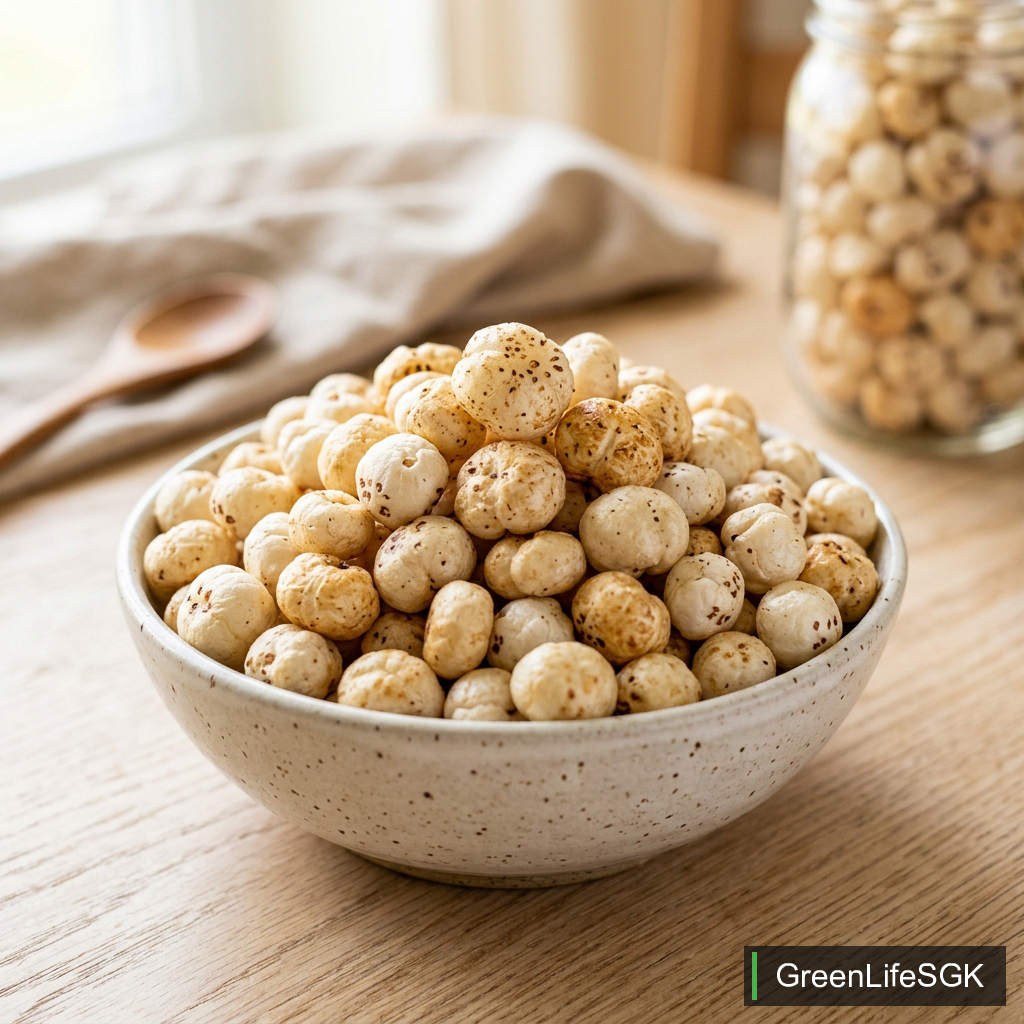
Many people believe makhana is popped corn or lotus seeds, but botanically it comes from the seeds of the prickly water lily plant (Euryale ferox), which grows in shallow wetland ponds. Over 85% of the world’s makhana is harvested and processed in the Mithila region of Bihar, India.
Farmers harvest the black thorny seeds from the muddy pond beds, clean them, roast them over intense wood fires, and strike them with wooden mallets. The hard black shell cracks open with a loud pop, releasing the fluffy, snow-white edible puff we know as Makhana.
🌿 Makhana Sizes & Quality Grades
When shopping for makhana, you will notice different sizes and prices in the market:
- Jumbo / Rasgulla Grade (Phool Makhana): The largest, roundest, and cleanest white puffs. They have virtually no hard black seed shell residue, swell evenly when cooked, and make the crispest roasted snacks and curries (like Makhana Kaju Curry).
- Medium Grade (Everyday Makhana): Medium-sized puffs that may have slight yellowish spots or small bits of black shell. Excellent for everyday evening snacking and family cooking.
- Broken / Churna Grade: Smaller broken pieces. Ideal for dry roasting and powdering into nutritious smoothie toppers, baby porridge, or rich makhana kheer desserts.
🧪 The Roasting Secret: How to Get Maximum Crunch Without Burning
Raw makhana straight from the packet is soft, chewy, and spongy. To turn it into irresistible, crispy snack puffs, follow this classic kitchen method:
💡 The 7-Minute Low-Flame Rule:
- Never Use High Heat: High heat will scorch the delicate white exterior before the inside moisture can evaporate, leaving you with burnt, rubbery puffs.
- Use a Heavy Kadai on Low Flame: Heat 1 teaspoon of desi ghee or cold-pressed olive oil in a wide, heavy-bottomed pan. Add 2 cups of makhana.
- Stir Continuously for 7 to 10 Minutes: Keep the heat on low and stir constantly. The gentle heat slowly drives out every trace of moisture.
- The Finger-Press Test: Take one makhana puff and press it between your thumb and forefinger. If it shatters into crisp, powdery crumbs with a distinct crunch sound, it is done! Turn off the stove and toss in your favorite spices while the makhana is still warm so the seasonings stick.
📊 Nutrition Facts (What is Inside Makhana?)
Makhana is celebrated by fitness enthusiasts because it has high food volume with very few calories. Here is the nutritional breakdown per 100 grams of plain raw makhana and per generous snacking bowl (about 30 grams):
| Nutrient | Per 100g | Per Snacking Bowl (~30g) | Why Your Body Needs It |
|---|---|---|---|
| Energy | 350 kcal | 105 kcal | Very low calorie for a large volume |
| Carbohydrates | 77 g | 23 g | Complex, slow-digesting plant carbs |
| Dietary Fiber | 14.5 g | 4.3 g (15% DV) | Keeps you feeling full for hours |
| Protein | 9.7 g | 2.9 g | Clean vegetarian protein |
| Total Fat | 0.5 g | 0.15 g | Practically fat-free naturally |
| Calcium | 60 mg | 18 mg | Supports strong teeth and bones |
| Magnesium | 67 mg | 20 mg | Supports heart rhythm and muscles |
| Potassium | 500 mg | 150 mg | Helps flush out excess sodium |
Sources: ICMR (National Institute of Nutrition) & USDA FoodData Central.
🌱 Why Makhana is Great for Weight Loss & Health
Makhana is one of the smartest snacks you can keep on your work desk or kitchen pantry:
- The Ultimate Weight Loss Snack: Because makhana puffs are light and airy, an overflowing bowl has only around 100 calories. Its rich combination of protein and dietary fiber keeps your stomach satisfied for hours, preventing mindless junk-food cravings between meals [1].
- Safe for Diabetics (Low Glycemic Index): Makhana has a low glycemic index, meaning it digests gradually and does not cause sudden spikes or crashes in blood sugar levels.
- Heart & Blood Pressure Friendly: Makhana is naturally very low in sodium and high in potassium and magnesium, which helps balance fluid levels in the body and supports healthy circulation.
- Traditional Fasting Food (Vrat Ka Khana): Because makhana is not a cereal grain (it is a water-lily seed), it is permitted in Navratri, Ekadashi, and Mahashivratri fasts, providing clean, sustained energy during fasting days.
📦 How to Store Roasted Makhana So It Stays Crispy for Weeks
Makhana is like a sponge for air humidity. If you leave roasted makhana in an open bowl for just 2 hours during monsoon or humid weather, it will absorb moisture and turn limp and chewy.
The Storage Trick: Always let your roasted makhana cool completely to room temperature first (putting warm makhana in a jar creates condensation steam). Once cool, transfer immediately into a tightly sealed airtight glass or metal jar. Kept away from humidity, your roasted makhana will stay super-crispy for up to 3 to 4 weeks!
🌶️ Easy 2-Minute Seasoning Ideas
Transform plain roasted makhana into gourmet snacks in seconds:
- Classic Pink Salt & Black Pepper: Toss warm roasted makhana with 1/2 tsp desi ghee, rock salt (sendha namak), and freshly cracked black pepper. Simple, pure, and soothing.
- Tangy Masala Chaat: Add a pinch of chaat masala, roasted cumin powder (bhuna jeera), Kashmiri red chili powder, and dry mango powder (amchur).
- Herbal Peri-Peri: Mix garlic powder, oregano, smoked paprika, and sea salt for a cinema-style spicy crunchy snack.
⚠️ Who Should Be Mindful with Makhana?
Makhana is one of the safest natural foods for children, adults, and seniors alike. A few practical points to keep in mind:
- Watch the Hard Shell Bits: Occasionally, a small piece of the black outer seed shell remains stuck to a puff. Check quickly with your fingers before feeding small toddlers to prevent choking.
- Watch Added Butter & Salt: Makhana itself is low in calories, but if you roast it in half a cup of butter or dump heavy processed cheese powder on it, the calorie count will multiply quickly. Use 1 teaspoon of healthy fat per batch.
- Drink Plenty of Water: Because makhana is high in dry fiber, always stay well-hydrated throughout the day for smooth digestion.
💬 Frequently Asked Questions
Can I eat makhana every day?
Yes. A daily snack portion of 1 to 2 cups of roasted makhana (about 30 grams) is a nutritious, wholesome habit that supports energy, bone health, and healthy weight management.
Is makhana gluten-free?
Yes, 100% naturally gluten-free. Makhana is an aquatic lily seed, not a wheat or cereal grain, making it completely safe for people with celiac disease or gluten sensitivity.
How do I make soggy roasted makhana crispy again?
If your stored makhana has absorbed air moisture and turned soft, simply toss it back into a dry pan on low heat for 2 to 3 minutes. The remaining moisture will evaporate and restore full crunch immediately!
📚 Scientific References
- Jha, V., et al. (2018). Nutritional and therapeutic values of Euryale ferox Salisb. (Makhana). International Journal of Current Research and Review, 10(14), 1–7.
- National Institute of Nutrition (ICMR). Nutritive Value of Indian Foods.
- USDA FoodData Central. Lotus seeds, dried.
⚖️ Simple Disclaimer
The culinary, nutritional, and storage tips on GreenLifeSGK are provided for daily home cooking and healthy snacking education. Natural foods support balanced wellness, but do not replace clinical medical care or personalized dietary advice. Always consult a healthcare professional for specific health concerns.