Quick Summary: Almonds (known as Badam in Hindi) are the crowned king of dry fruits in Indian households. For generations, Indian mothers have handed soaked, peeled almonds to school children every morning for memory and concentration. Packed with natural Vitamin E, clean plant protein, dietary fiber, and heart-healthy fats, almonds are nature’s ultimate daily brain fuel.
📋 Table of Contents
- What are Almonds?
- Popular Almond Types: Mamra vs. California vs. Gurbandi
- The Soaking Science: Why You Should Always Soak and Peel Badam
- Nutrition Facts (What is Inside Almonds?)
- Proven Health & Memory Benefits
- How to Store Almonds So They Never Go Stale or Rancid
- Best Time to Eat Almonds (How Many Per Day?)
- Who Should Be Mindful with Almonds?
- Frequently Asked Questions
- Scientific References
🔍 What are Almonds?
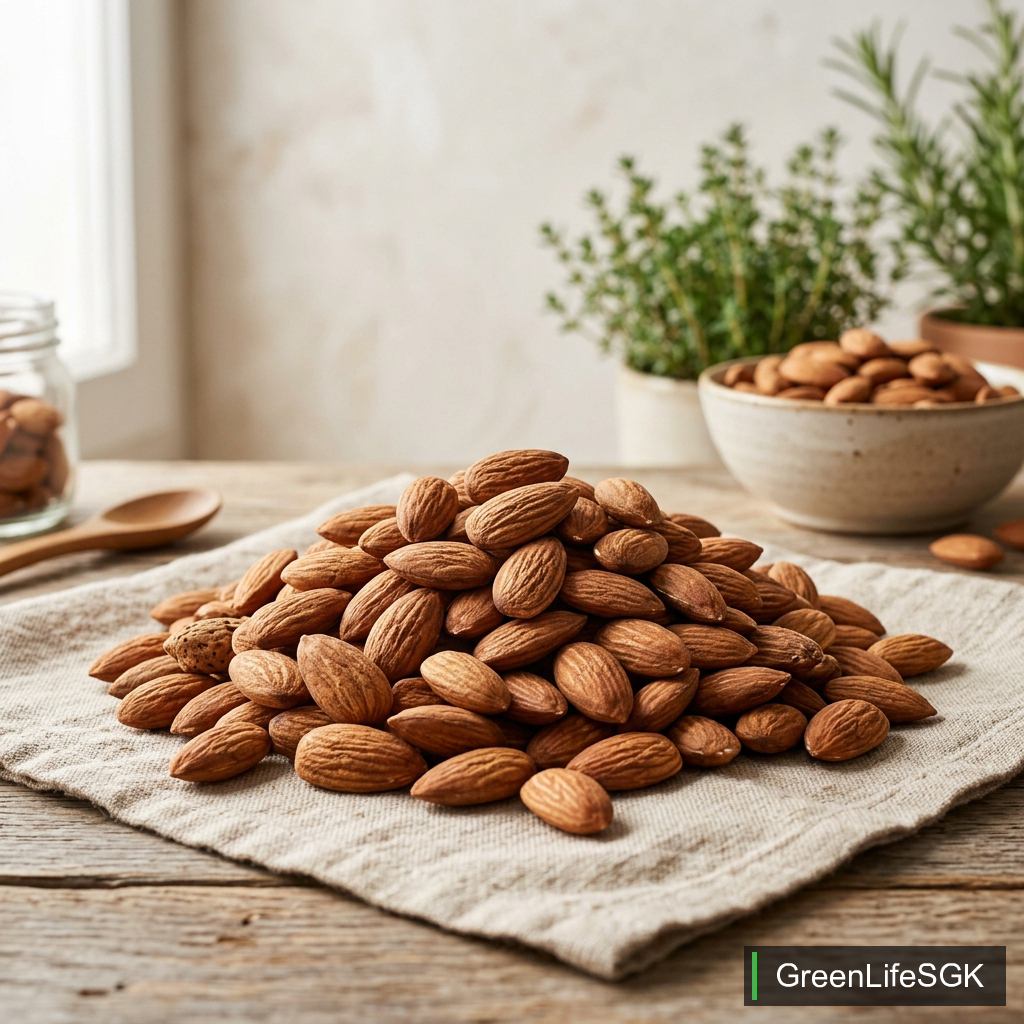
Almonds (Prunus dulcis) are actually the edible seeds of the almond tree, closely related to peaches and apricots. The fruit grows inside a green fuzzy hull with a hard woody shell protecting the golden-brown kernel inside.
Almonds have been cultivated along the ancient Silk Road across Central Asia, Kashmir, and the Mediterranean for thousands of years. Today, they are prized worldwide as a nutrient-dense powerhouse that can be eaten soaked, raw, roasted, or blended into rich almond milk and traditional badam halwa.
🌿 Popular Almond Types: Mamra vs. California vs. Gurbandi
When you visit an Indian dry fruit market, you will see a huge difference in almond shapes, textures, and prices:
- Mamra Badam (Kashmir & Iran): The most prized, nutritious, and expensive almond in the world. Easily recognized by its concave, boat-like shape and slightly wrinkled surface. Mamra almonds contain up to 50% natural almond oil (compared to 25–30% in regular almonds), giving them an intensely sweet crunch and premium nutrient density.
- Gurbandi Badam (Chhoti Giri): Smaller, compact kernels grown in Afghanistan and Kashmir. They are packed with natural oils and antioxidants, though a small percentage of kernels can have a mildly bitter taste. Highly valued in traditional Ayurvedic remedies.
- California Almonds: The most widely available supermarket almond. They are large, uniform in size, have a smooth light-brown skin, and a milder taste. While they have slightly lower oil content than Mamra, they are affordable, delicious, and great for everyday snacking and baking.
🧪 The Soaking Science: Why You Should Always Soak and Peel Badam
Why did our grandmothers always insist on soaking 5 almonds in a small bowl of water overnight and peeling the brown skin before breakfast? Modern nutritional science confirms their wisdom was 100% correct!
💡 The 3 Science Reasons to Soak Almonds:
- Removes Anti-Nutrients (Tannins & Phytic Acid): The brown outer skin of raw almonds contains natural plant defenses called phytic acid and tannins. These compounds bind to iron, zinc, and calcium in your gut, preventing your body from absorbing them. Soaking breaks down these anti-nutrients.
- Releases Digestive Enzymes (Lipase): Soaking overnight tricks the dormant seed into thinking it is time to sprout. This naturally releases the enzyme lipase, which helps your stomach break down fats smoothly with zero bloating.
- Makes Nutrients 100% Accessible: Once the brown skin slips off, the soft, creamy white kernel inside is far gentler on your digestive tract and tastes naturally sweeter.
📊 Nutrition Facts (What is Inside Almonds?)
Almonds are one of the most nutrient-dense foods on Earth. Here is what you get in 100 grams of almonds and in an everyday daily portion (about 10 almonds / ~12 grams):
| Nutrient | Per 100g | Per 10 Almonds (~12g) | Why Your Body Needs It |
|---|---|---|---|
| Energy | 579 kcal | 70 kcal | Clean, slow-burning fuel |
| Protein | 21.2 g | 2.5 g | Supports muscle repair & satiety |
| Total Fat | 49.9 g | 6.0 g | Heart-healthy monounsaturated fats |
| Dietary Fiber | 12.5 g | 1.5 g | Helps keep blood sugar balanced |
| Vitamin E (Alpha-Tocopherol) | 25.6 mg | 3.1 mg (25% DV) | Powerful antioxidant for skin & cells |
| Magnesium | 270 mg | 32 mg (8% DV) | Supports deep sleep and nerve function |
| Calcium | 264 mg | 32 mg | Strong bones and healthy teeth |
| Riboflavin (Vitamin B2) | 1.14 mg | 0.14 mg (10% DV) | Converts food into active energy |
Sources: ICMR (National Institute of Nutrition) & USDA FoodData Central.
🌱 Proven Health & Memory Benefits
Adding a handful of almonds to your morning routine delivers real, clinically proven benefits:
- Supports Brain Function & Memory: Almonds are rich in riboflavin and L-carnitine, two vital brain nutrients that support cognitive vitality, memory retention, and mental sharpness [1].
- Heart-Healthy Cholesterol Balance: Multiple clinical trials show that snacking on almonds daily helps lower “bad” LDL cholesterol while preserving protective “good” HDL cholesterol [2].
- Glowing Skin & Anti-Aging Support: A single daily serving provides over 25% of your Daily Value for Vitamin E. Vitamin E protects skin cells against UV sunlight damage and supports skin elasticity.
- Stabilizes Blood Sugar Levels: Because almonds are high in healthy fats, protein, and fiber with very low carbs, eating a few almonds with fruit or carbs prevents sudden spikes in blood sugar.
📦 How to Store Almonds So They Never Go Stale or Rancid
Because almonds are packed with delicate, healthy natural oils, exposure to heat, air, and humidity causes those oils to oxidize, making the nuts smell stale and taste unpleasantly bitter.
The Storage Secret: Store whole raw almonds in an airtight glass or food-grade metal container in a cool, dark kitchen cupboard for up to 3 months. For long-term freshness (up to 1 full year), keep the sealed jar inside your refrigerator crisper! The cold temperature stops the natural oils from breaking down, keeping every kernel sweet and crunchy.
⏰ Best Time to Eat Almonds (How Many Per Day?)
- The Golden Window: The best time to eat almonds is in the morning on an empty stomach. 5 to 7 soaked and peeled almonds provide clean energy and wake up your metabolism.
- As a 4 PM Desk Snack: A small handful of dry-roasted almonds around 4 PM prevents the typical evening energy slump and stops you from reaching for fried packaged snacks.
- Ideal Daily Portion: For most healthy adults, 8 to 10 almonds per day (approx. 12 to 15 grams) is the ideal balance for maximum health benefits without excess calories.
⚠️ Who Should Be Mindful with Almonds?
Almonds are safe and nourishing for most people, but keep these practical points in mind:
- Nut Allergies: Tree nut allergies can be serious. If you have a diagnosed tree nut allergy, avoid almonds completely.
- Watch Salted & Sugared Varieties: Market-bought “smoked” or “honey-roasted” almonds often come coated in refined palm oil, excess salt, and synthetic flavorings. Stick to plain raw, soaked, or home-roasted almonds.
- Portion Control: While healthy, almonds are calorie-dense. Stick to your 8 to 10 nuts daily budget if you are actively working on weight loss.
💬 Frequently Asked Questions
Can I eat raw almonds without soaking them?
Yes. Raw unpeeled almonds are still nutritious and provide extra dietary fiber from the skin. However, soaking them makes them softer to chew, gentler on your digestion, and increases the absorption of minerals.
Can I drink the water that almonds were soaked in?
No, it is best to discard the soaking water. The water absorbs the released phytic acid, dirt, and tannins from the brown skins. Always rinse the soaked almonds with fresh clean water before eating.
Are bitter almonds safe to eat?
No. Standard sweet almonds are completely safe. However, wild bitter almonds contain amygdalin, which breaks down into toxic cyanide when chewed. If you ever bite into an intensely bitter almond, spit it out immediately and rinse your mouth.
📚 Scientific References
- Berryman, C. E., et al. (2011). Inclusion of almonds in a cholesterol-lowering diet improves plasma adiponectin and lipid profiles. The American Journal of Clinical Nutrition, 94(2), 392–400. PubMed: 21697258
- Tan, S. Y., & Mattes, R. D. (2013). Appetitive, dietary and health effects of almonds consumed with meals or as snacks. European Journal of Clinical Nutrition, 67(11), 1205–1214. NCBI PMC: PMC3820066
- National Institute of Nutrition (ICMR). Nutritive Value of Indian Foods.
⚖️ Simple Disclaimer
The nutritional, culinary, and storage information on GreenLifeSGK is provided for everyday wellness and kitchen education. Natural food items support a healthy lifestyle, but do not replace certified medical care or treatment. Consult a physician or registered dietitian for specific dietary needs.